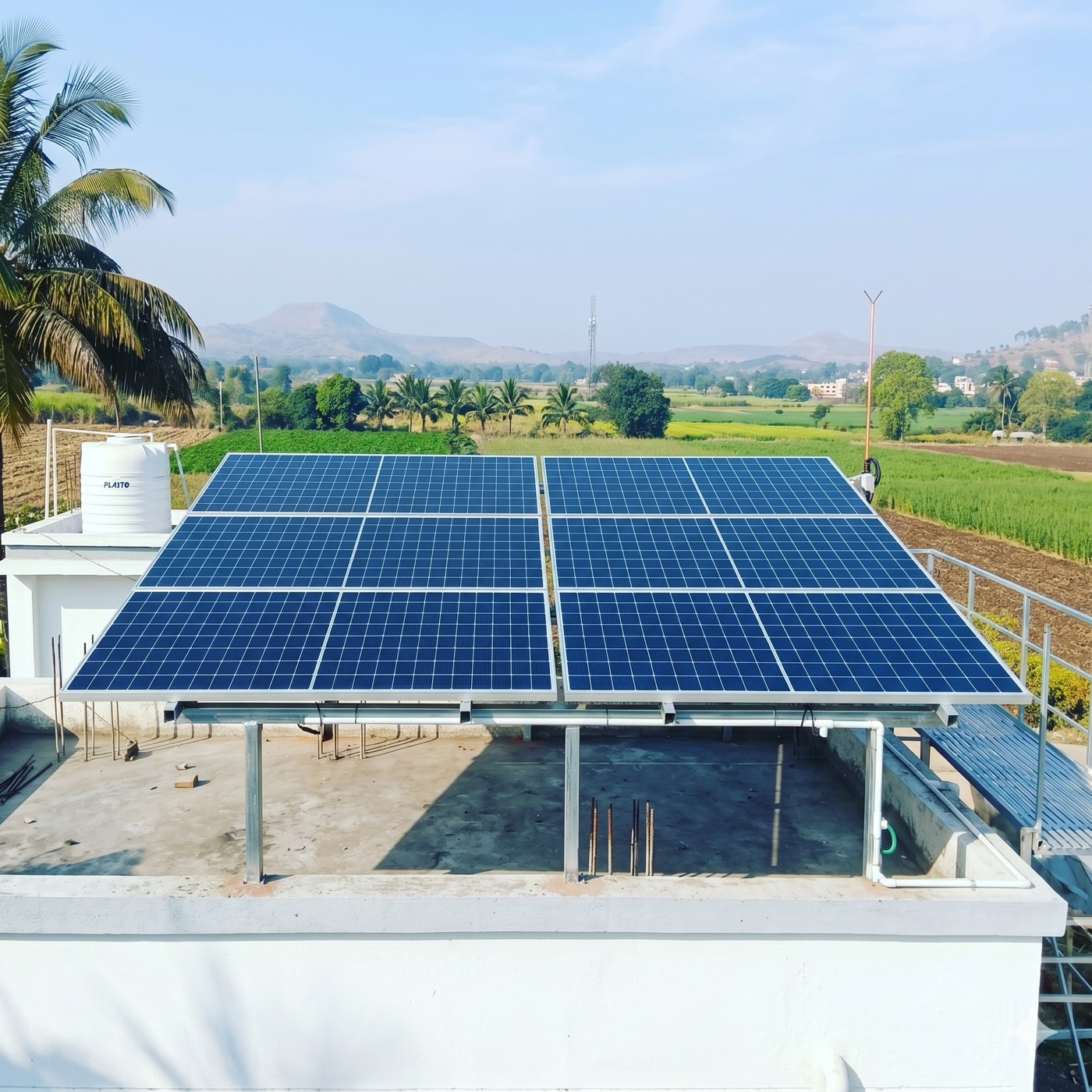
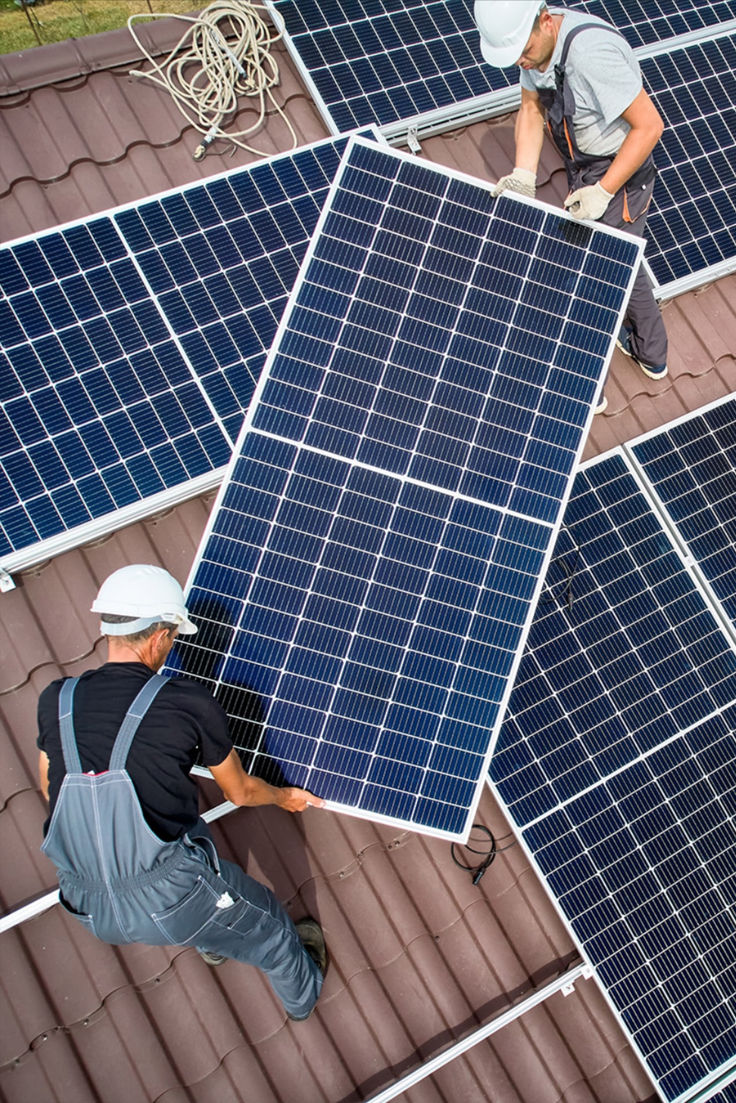
Most of Maharashtra gets 5 to 5.5 peak sun hours every day. A 3 kW solar system in Pune generates about 300 units of electricity every month. That covers a full 3BHK — fans, lights, fridge, and one AC. MSEDCL charges ₹4 to ₹9 per unit. Go above 300 units a month and every extra unit costs more. Solar makes those expensive units free. The electricity from your rooftop costs nothing. The sun sends you no bill.
Real Homes, Real Savings — What Maharashtra Families Are Actually Saving
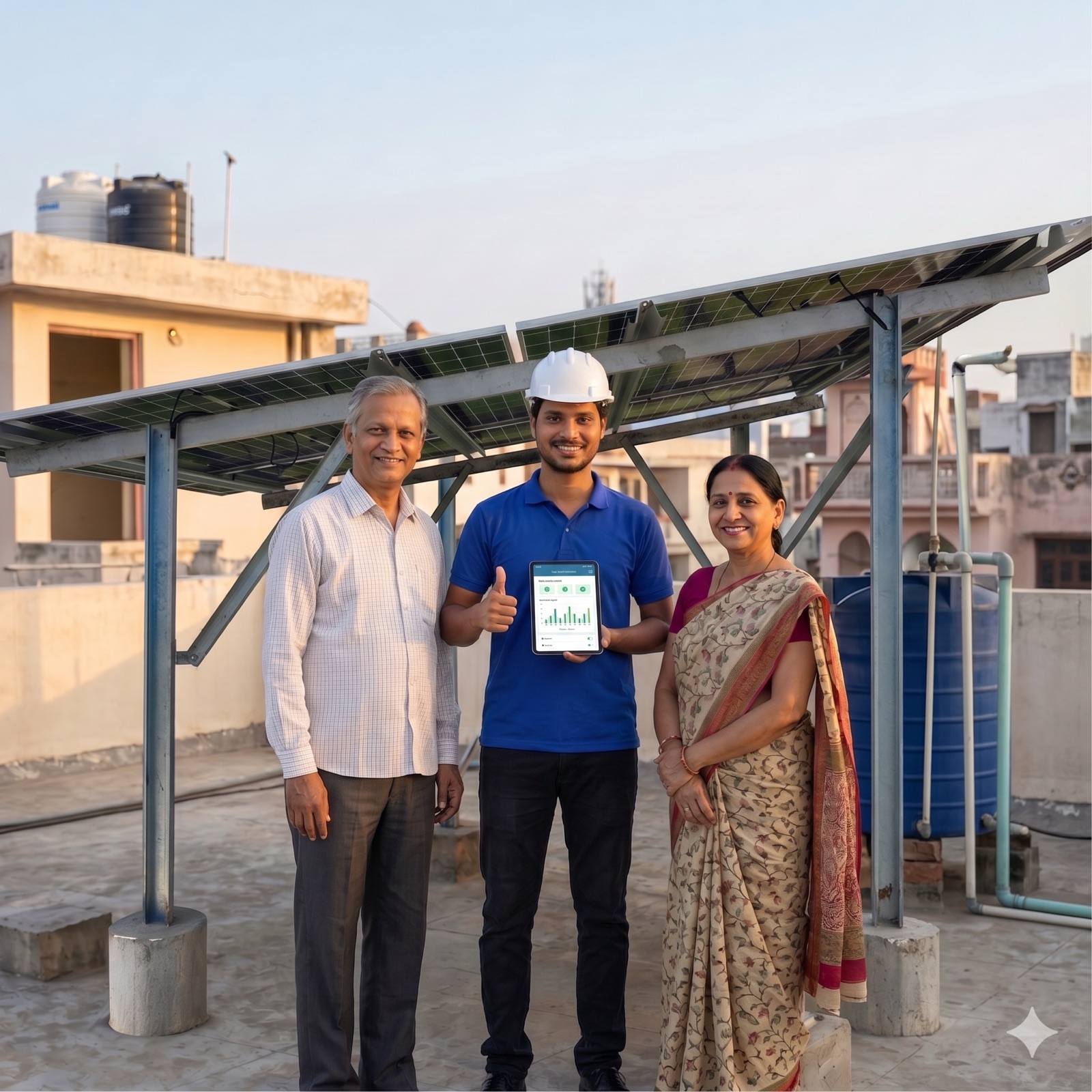
Before we get into costs and calculations, here's what Prompt customers across Pune district are actually experiencing after going solar:
- Bhalerao Family, Kalamb — Their 3.3 kW system took their monthly electricity bill from ₹6,550 all the way down to zero. That's ₹6,550 back in their pocket every single month.
- Shaha Family, Junnar — A 3 kW system brought their bill down from ₹6,420 to just ₹130. Saving ₹6,290 per month, consistently.
- Thorat Family, Manchar — 10 kW system, ₹4,370 bill reduced to zero. They now generate more than they need — the extra goes back to the grid.
- Jori Family, Pargaon — 5 kW system, monthly bill dropped from ₹3,630 to ₹130. Saving ₹3,500 every month.
These are not projections. These are real MSEDCL-verified electricity bills from homes within 50 km of Pune.
How Much Does Rooftop Solar Cost in Maharashtra?
Here's an honest breakdown for on-grid systems in Maharashtra as of 2026, before subsidy:
| System Size | Approx. Cost (Before Subsidy) |
|---|
| 1 kW | ₹75,000 – ₹85,000 |
| 2 kW | ₹1,40,000 – ₹1,60,000 |
| 3 kW | ₹1,90,000 – ₹2,20,000 |
| 5 kW | ₹2,90,000 – ₹3,30,000 |
| 10 kW | ₹5,20,000 – ₹5,80,000 |
These prices vary based on panel brand, inverter type, mounting structure height, and your location. Roof terrace access and cable routing distance from the inverter to your main panel also affect the final quote. But here's the important part — most homeowners never pay these full prices.
The PM Surya Ghar Subsidy — Government Pays a Big Chunk of Your System Cost
Under the PM Surya Ghar Muft Bijli Yojana, the central government directly transfers a subsidy into your bank account after your solar system is commissioned and your net meter is activated by MSEDCL.
| System Capacity | Central Government Subsidy |
|---|
| 1 kW | ₹30,000 |
| 2 kW | ₹60,000 |
| 3 kW or above | ₹78,000 (maximum) |
A 3 kW system costing around ₹2,10,000 comes down to roughly ₹1,32,000 after subsidy. A 5 kW system that costs ₹3,25,000 before subsidy costs about ₹2,47,000 after the ₹78,000 deduction. Note: Maharashtra does not offer an additional state-level subsidy beyond the central scheme (unlike Delhi and UP), but the central subsidy alone makes a significant difference.
Return on Investment — The 25-Year Picture
Here's what Prompt customers in the Pune belt are experiencing over time, based on real bill data and an assumed MSEDCL tariff increase of around 4% per year:
| System Size | Cost After Subsidy | Savings Over 25 Years | ROI |
|---|
| 3 kW | ~₹1,32,000 | ~₹14 – ₹16 lakh | ~10 – 12x |
| 5 kW | ~₹2,47,000 | ~₹23 – ₹26 lakh | ~10 – 11x |
| 10 kW | ~₹5,02,000 | ~₹46 – ₹52 lakh | ~9 – 10x |
The payback period for most homes in Maharashtra currently sits at 4 to 5 years. After that, everything your system generates is pure savings for 20+ more years. No fixed deposit, no mutual fund, no real estate investment gives you guaranteed returns the way a rooftop solar system does — because your electricity savings are not subject to market risk. MSEDCL will raise tariffs regardless of what markets do. Your solar system locks in free electricity regardless of what tariffs do.
How Does MSEDCL Net Metering Work?
After your system is commissioned, MSEDCL replaces your existing meter with a bi-directional net meter. This meter tracks two things: how many units your solar panels send to the grid, and how many units your home draws from the grid. At the end of each billing cycle, MSEDCL only charges you for the net difference. If your panels generated more than you used, those surplus units carry forward to the next month.
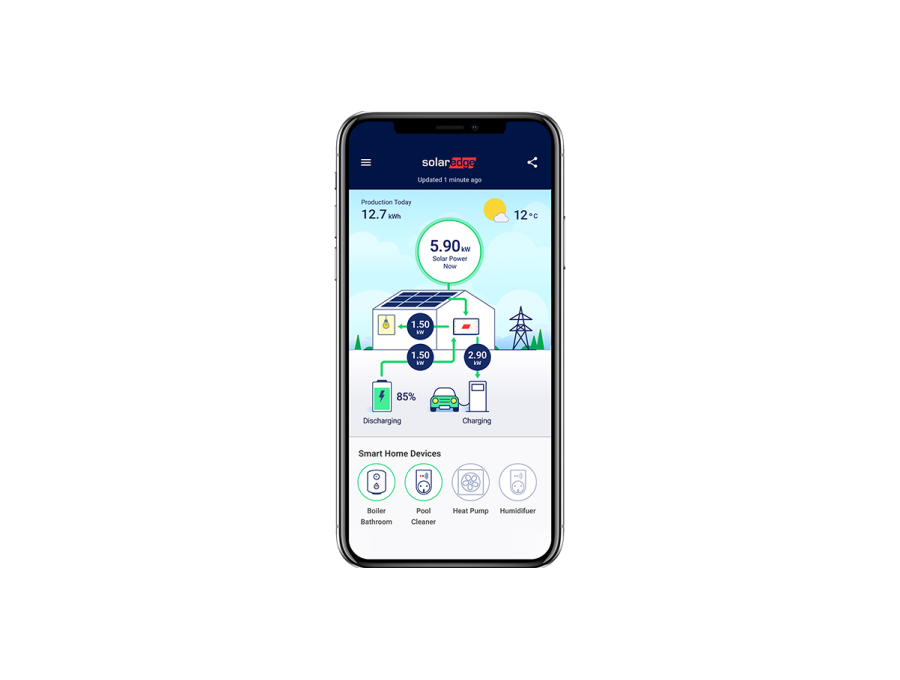
In practical terms: during summer, a well-sized solar system generates more electricity than a typical home uses. Those extra units reduce your monsoon and winter bills. Across a full year, most Prompt customers see their MSEDCL bill drop by 80 to 95%.
Net metering applications for Maharashtra are processed through the official MSEDCL Solar PV Application Portal — Prompt prepares and files this application on your behalf, coordinates the feasibility inspection, and manages the bi-directional meter installation.
What System Size Do You Need?
| Monthly MSEDCL Bill | Estimated Monthly Units | Recommended System |
|---|
| ₹500 – ₹1,500 | 100 – 200 units | 1 – 2 kW |
| ₹1,500 – ₹3,000 | 200 – 350 units | 2 – 3 kW |
| ₹3,000 – ₹5,500 | 350 – 550 units | 3 – 5 kW |
| ₹5,500 and above | 550+ units | 5 – 10 kW |
System sizing isn't just about your bill though. Your roof's available shadow-free area, orientation, and local load patterns all factor in. Prompt's survey team visits your home before any sizing recommendation — because a wrong-sized system, even from a good company, is money not optimally spent.
What to Check Before Going Solar
Before booking a site survey, four factors determine whether your home is a strong solar candidate:
- Roof orientation — South-facing roofs with no shading between 9am–5pm get maximum yield. East or west-facing roofs still work but generate 15–20% less annually.
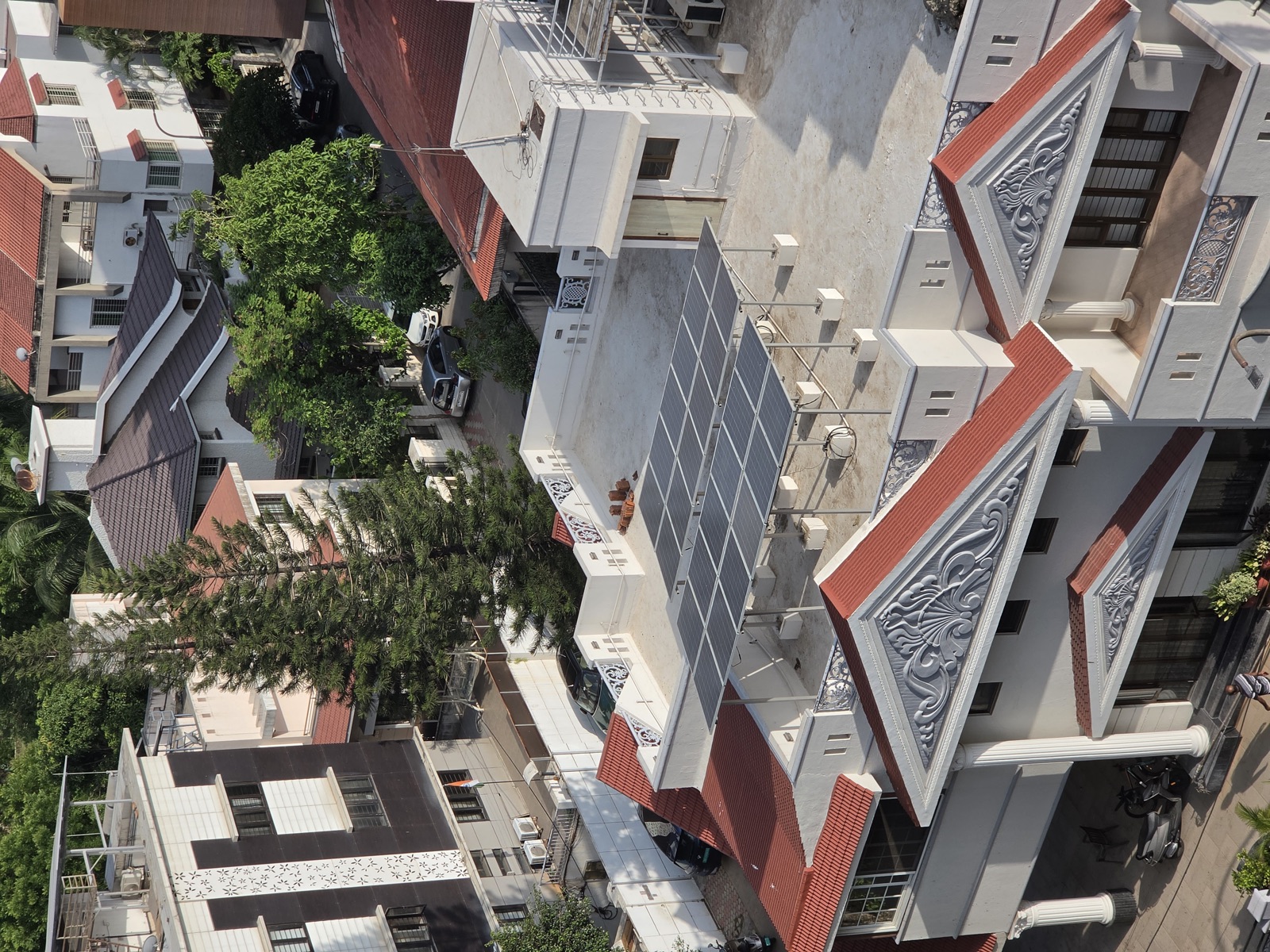
- Shadow-free roof area — A 3kW system needs roughly 250–300 sq ft of clear, unshaded space. Water tanks, AC outdoor units, and staircase structures can reduce usable area.
- MSEDCL connection type — LT single-phase, LT three-phase, and HT connections each have different net metering procedures. Your existing connection type affects which system size is permissible under MSEDCL rules.
- Name on property and connection — The property ownership and the electricity connection must both be in the applicant's name for PM Surya Ghar subsidy eligibility. This is one of the most common stumbling blocks — worth verifying early.
Which Type of Solar Panel is Best for Homes in India?
Solar panels come in three main types used for residential rooftops in India:
- Monocrystalline — Highest efficiency (18–21%), best for limited roof space. 300–400W per panel. Industry standard for quality residential installations.
- Polycrystalline — More affordable, slightly lower efficiency (13–16%). 250–350W per panel. Good for large roofs where space is not a constraint.
- Bifacial — Captures light from both the front and rear side, delivering 5–15% higher yield than standard mono panels. 350–450W per panel. Ideal for roofs with light-coloured or reflective surfaces where rear-side irradiance is available.
Prompt uses Waaree and Adani Bifacial panels as standard across all residential installations. TOPCon panels — the next generation of high-efficiency silicon cell technology — are available on request for customers who want maximum output from a smaller roof footprint.
Mounting Structure — What Holds Your Panels in Place
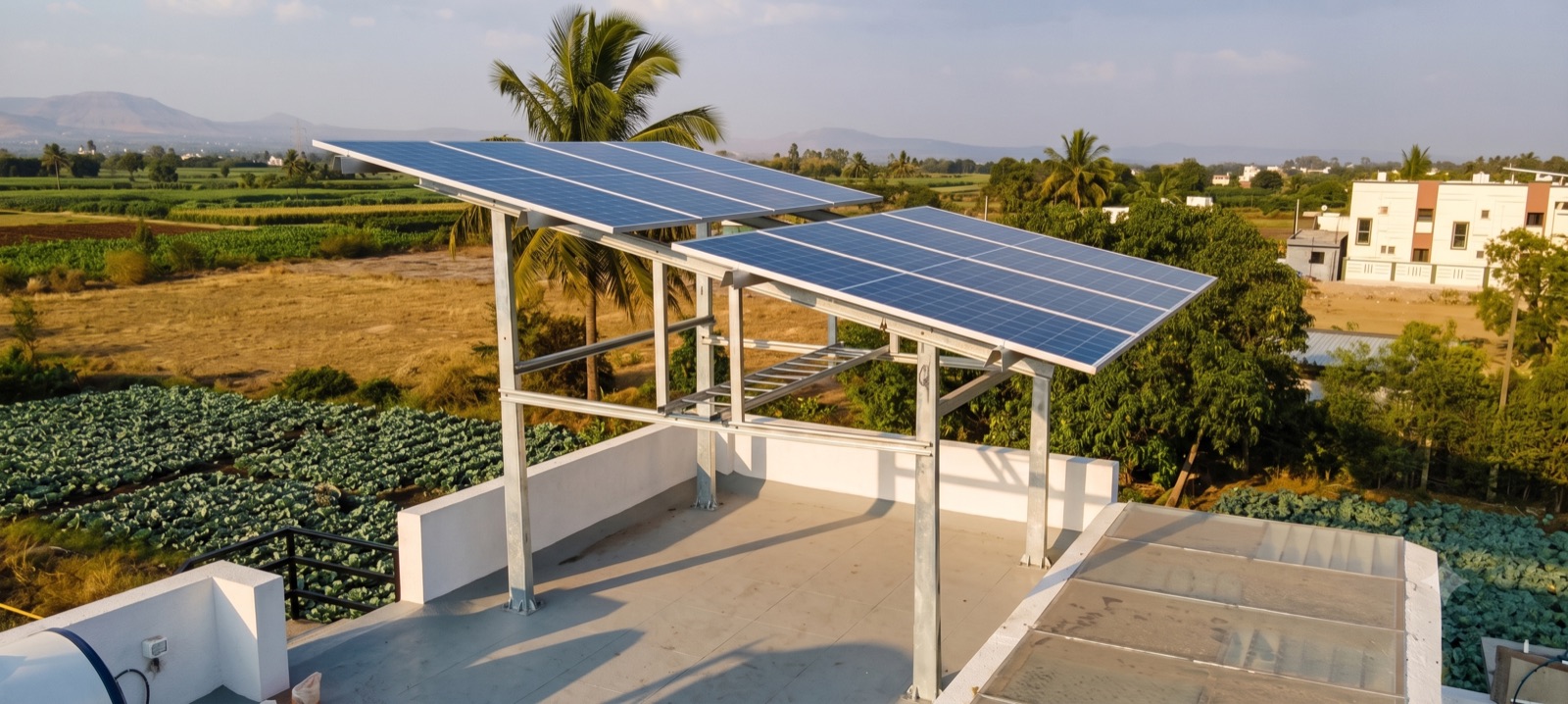
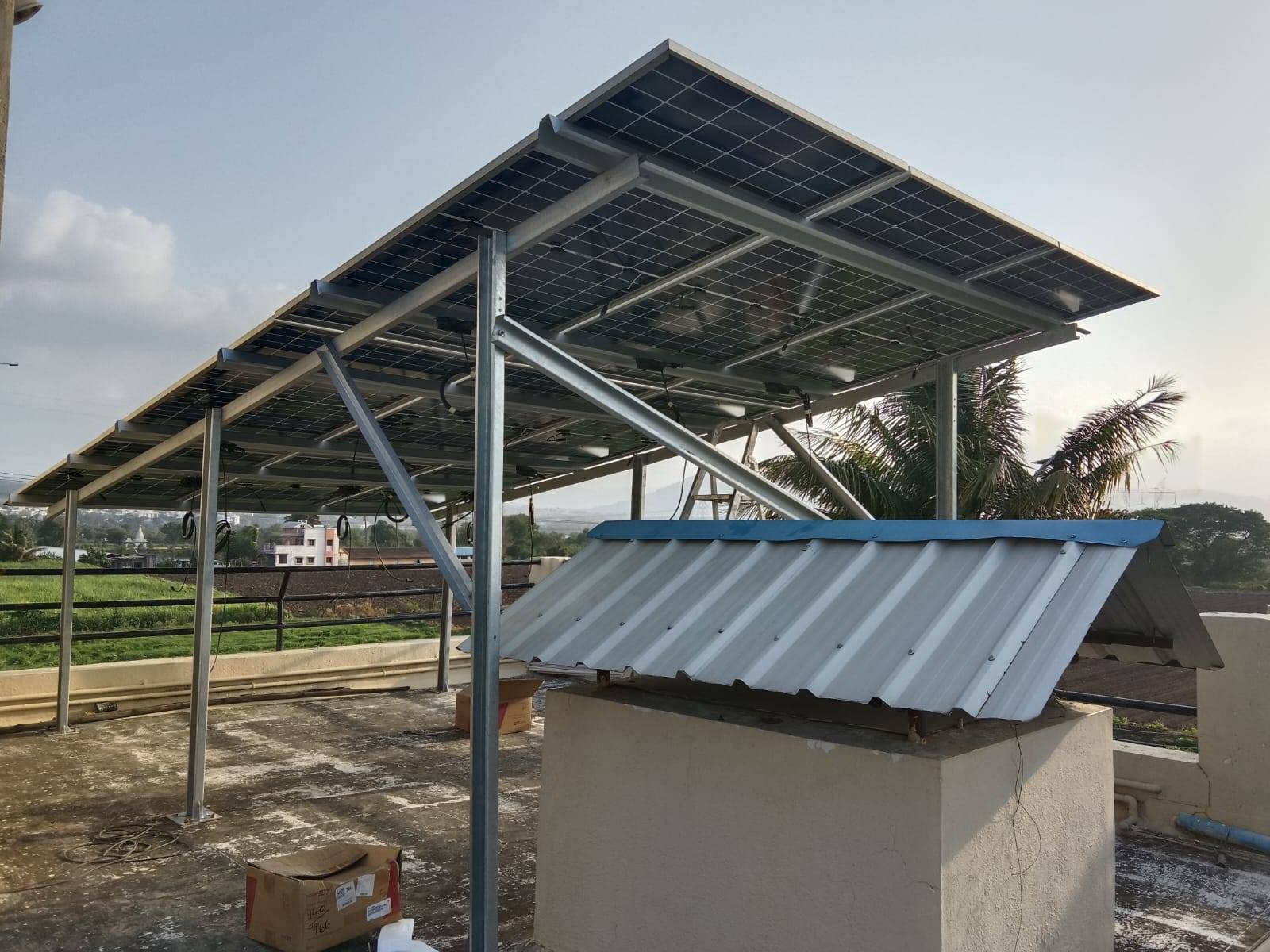
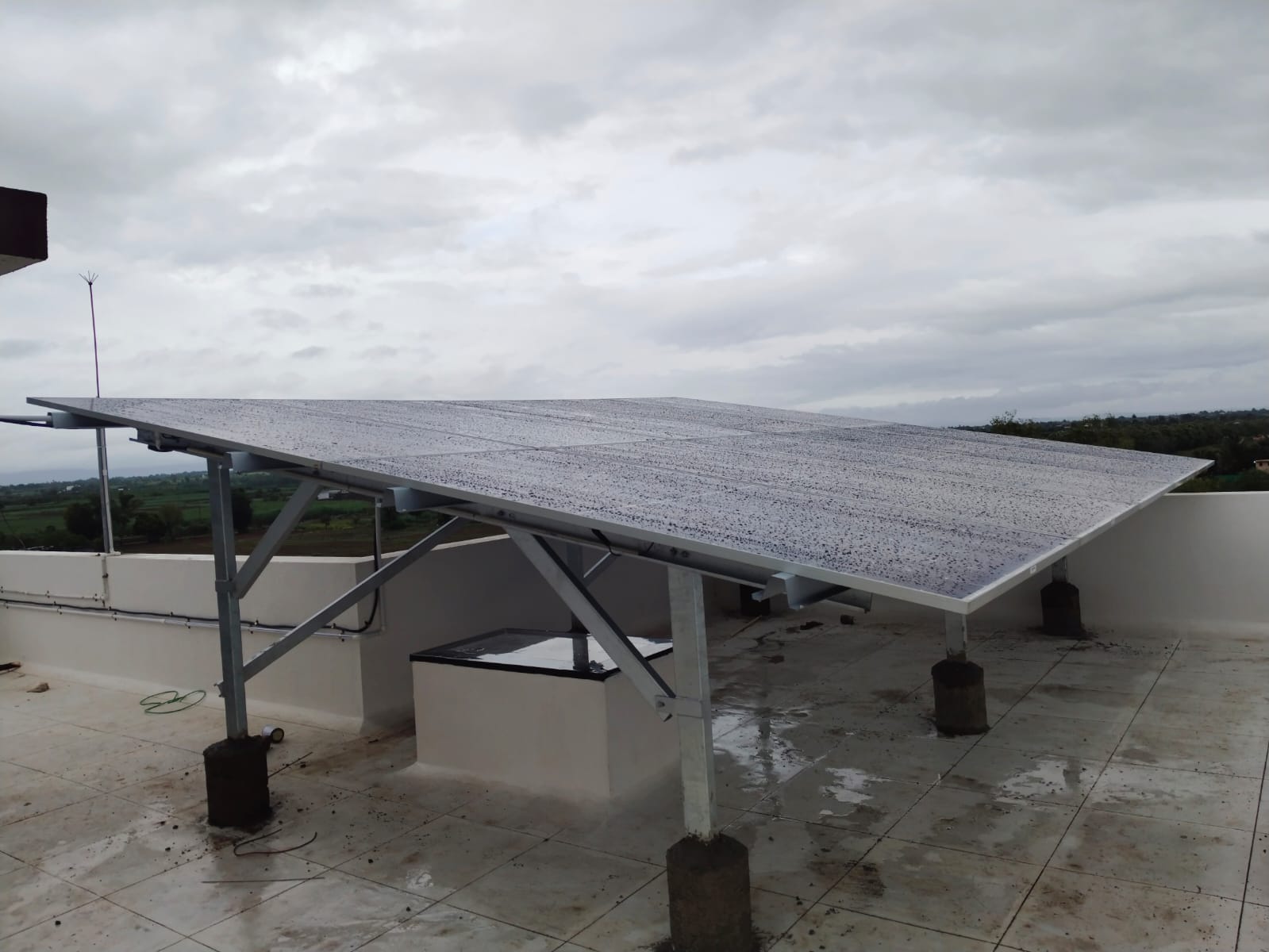
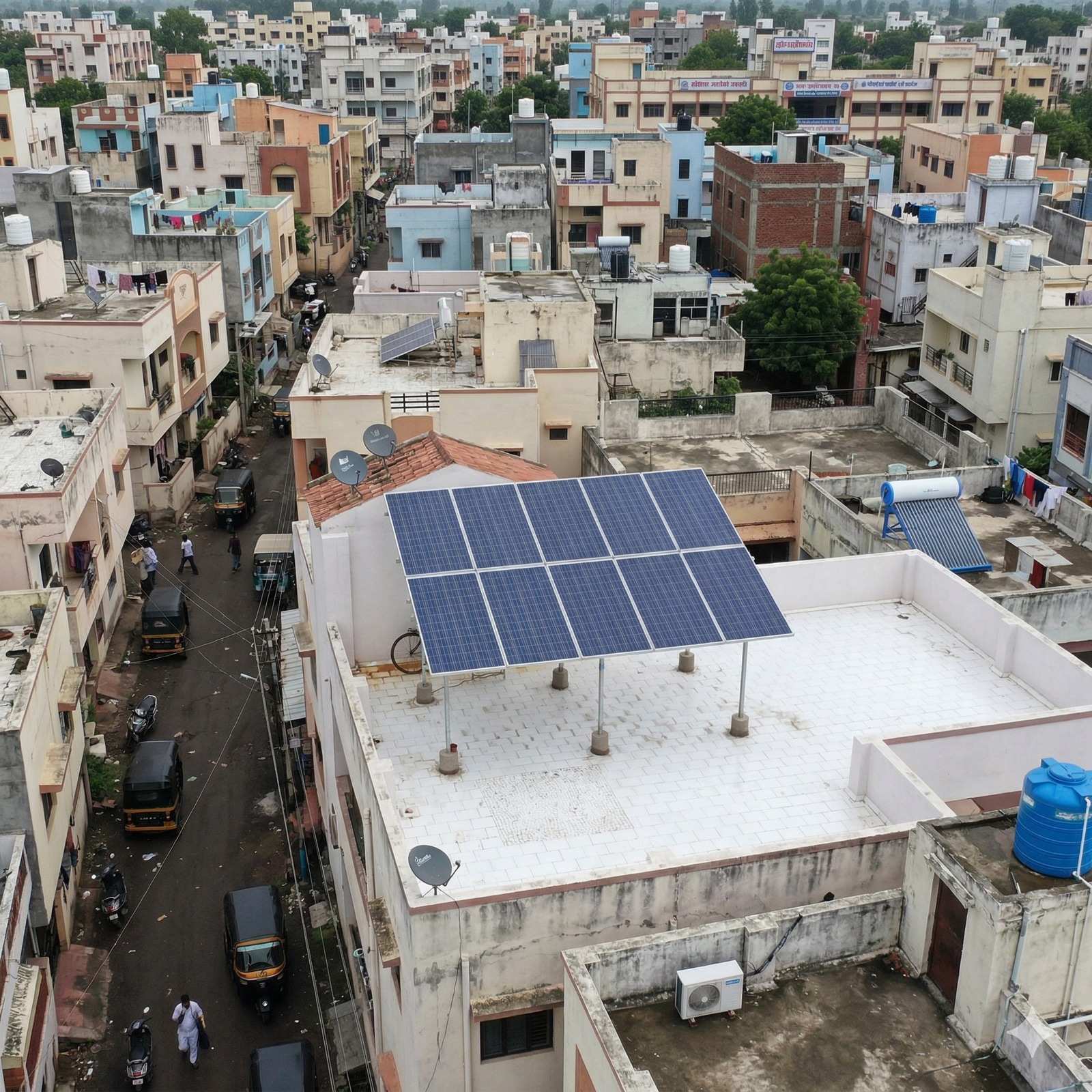
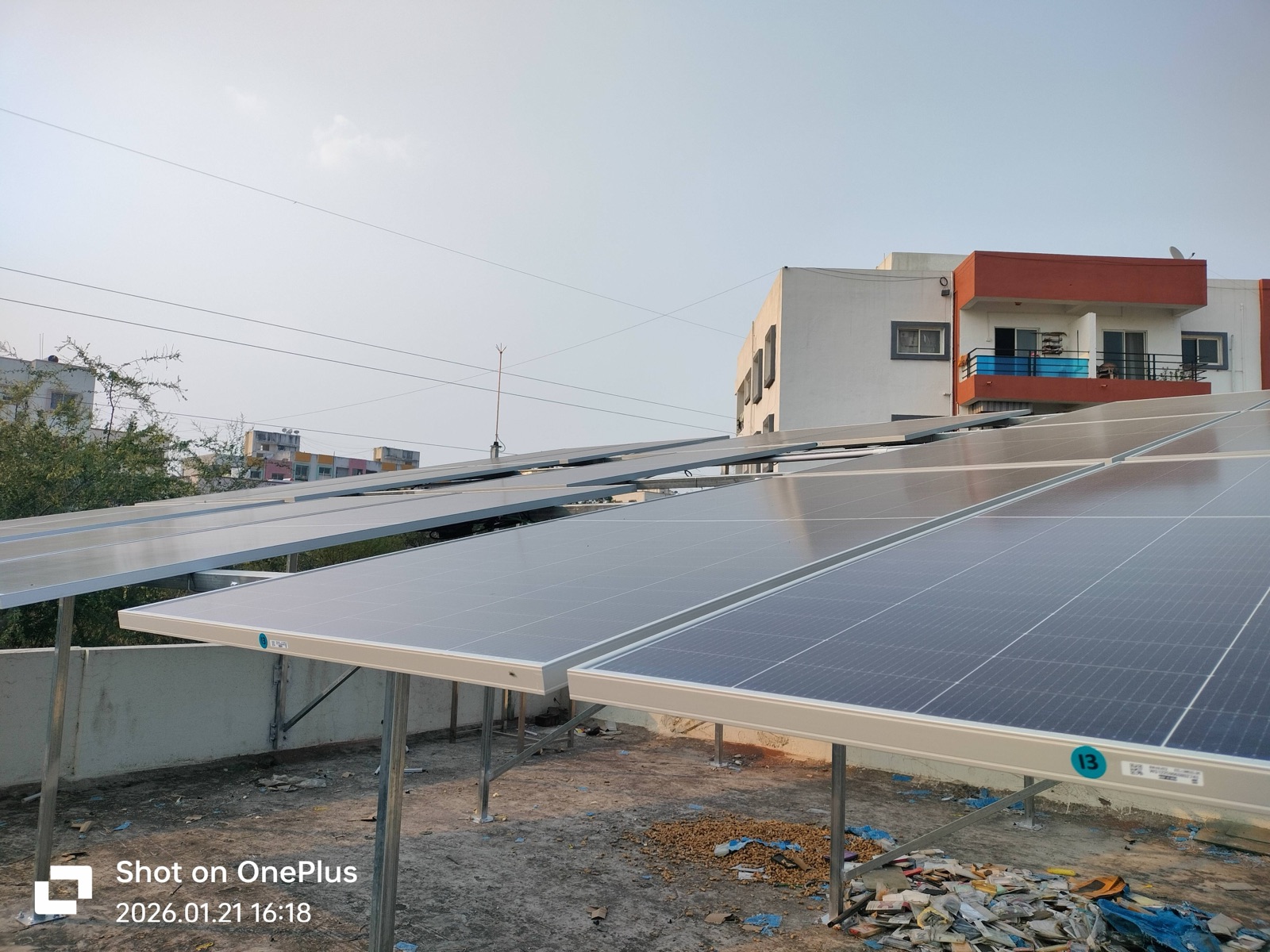
The mounting structure attaches your solar panels to your roof and needs to withstand wind loads, thermal expansion, and decades of monsoon weather. Prompt conducts a space analysis at every site and recommends the right structure based on your roof type, panel layout, and how you use your terrace:
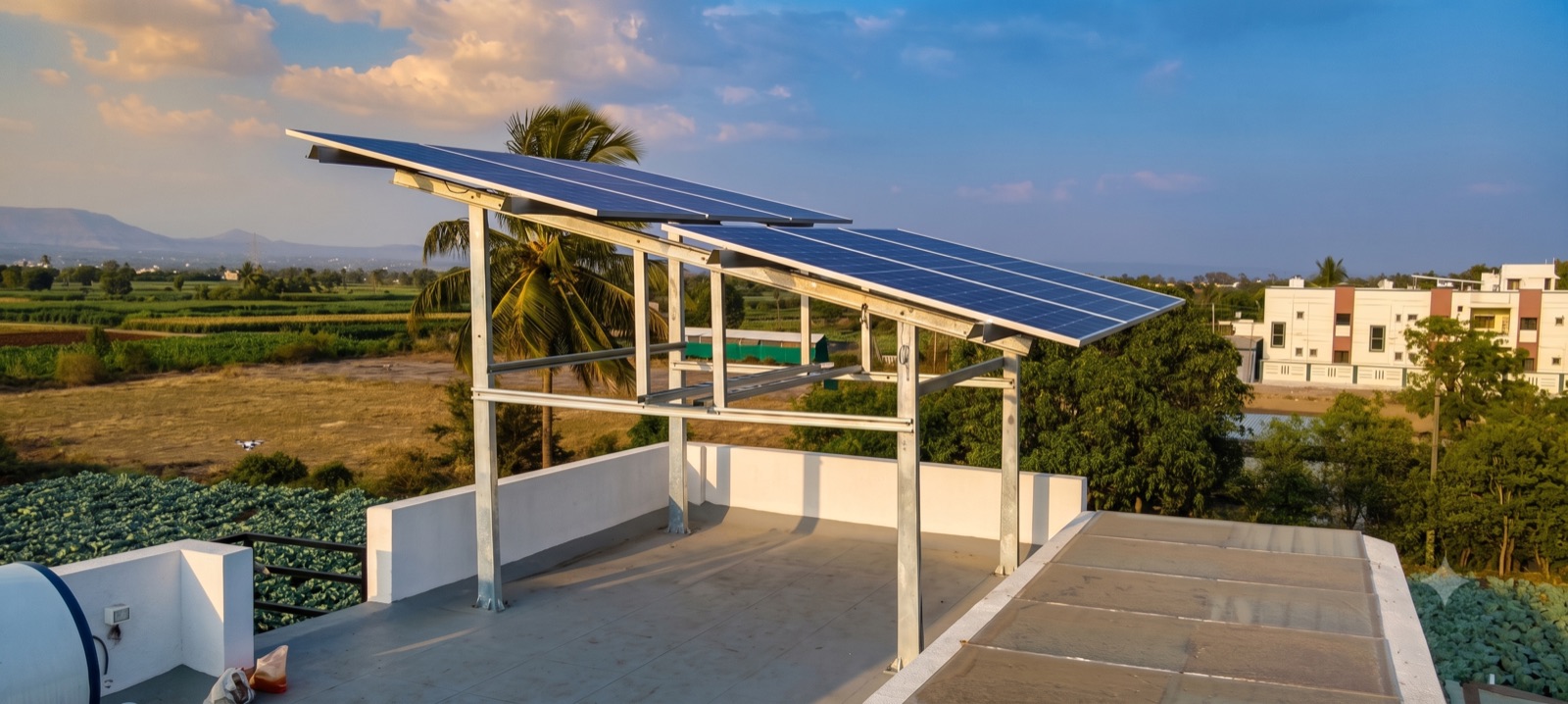
- GI (Galvanised Iron) Structure — Standard for most flat-roof residential installations. Cost-effective, corrosion-resistant, and structurally reliable for typical loads.
- Hot-Dip Galvanised Structure — Superior corrosion protection through a deeper zinc coating. Recommended for roofs with heavy monsoon runoff or homes in high-humidity areas.
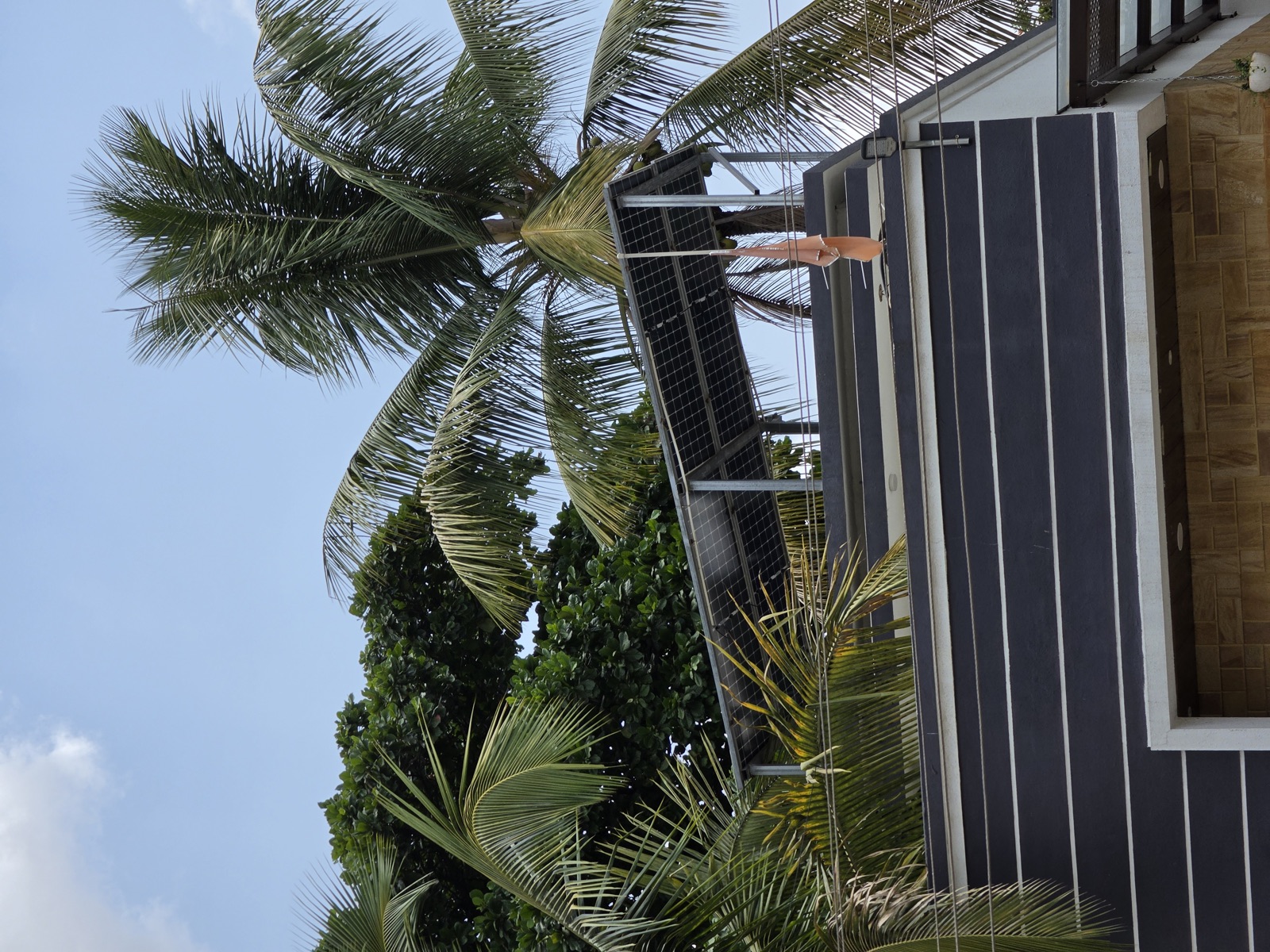
- Hot-Dip Galvanised with Walkway — Same corrosion protection with an elevated walkway built into the frame. Allows safe maintenance access without stepping on panels or damaging roof waterproofing.
- Monorail Structure — A sleek single-rail system that minimises roof penetration points. Suited for homes where terrace aesthetics matter or available space is compact.
Structure selection happens during the site visit — not after installation. Every Prompt mounting structure uses MNRE-approved materials designed for a minimum 25-year service life.
Who Can Apply for the PM Surya Ghar Subsidy?
- You are an Indian citizen installing solar on a property you legally own
- Your electricity connection is in your name with MSEDCL (or your local DISCOM)
- You have not previously received a solar subsidy under any government scheme
- Your system uses Made-in-India solar panels (required under the scheme)
- The property is a residential building, not a commercial establishment
If you're unsure whether your connection type or property qualifies, our team can check before you invest any time in the application process. See our full PM Surya Ghar subsidy guide for subsidy slabs and the complete eligibility checklist.
How to Apply for the Subsidy — Step by Step
When you install with Prompt, we handle the documentation and upload process for you. But here's the full picture so you know what's happening at each stage:
- Register on the PM Surya Ghar portal — Select Maharashtra and MSEDCL as your DISCOM. Enter your consumer number to create your account.
- Submit your application — Fill in your personal details and electricity connection information exactly as they appear on your latest MSEDCL bill.
- Upload required documents — Identity proof, property ownership proof, your consumer number, and bank account details with a cancelled cheque.
- Choose an MNRE-registered installer — Prompt is registered on the national portal. Your vendor must be DISCOM-approved to qualify.
- Physical installation — Panels, inverter, and mounting structure installed at your property, typically in 1 to 2 days.
- MSEDCL net meter activation — We submit your file to MSEDCL for inspection and net meter installation. This typically takes 3 to 6 weeks depending on MSEDCL workload in your area.
- Commissioning certificate — Once MSEDCL inspects and approves the system, they issue a commissioning certificate.
- Subsidy credited — You upload the certificate on the portal. Within 30 working days, the subsidy amount is transferred directly to your bank account.
The whole process from your first call to subsidy-in-bank typically runs 45 to 60 days for most Maharashtra homes.
On-Grid vs Off-Grid Solar — Which is Right for Your Home?
The short answer: most Maharashtra homeowners should go on-grid. MSEDCL's grid supply across urban and semi-urban Maharashtra is now reasonably reliable — power cuts of more than 4 to 6 hours a day are uncommon in most areas. An on-grid system generates electricity during the day, uses it in real time, sends the excess to the grid, and draws from the grid at night. No batteries needed, lower upfront cost, and eligible for the PM Surya Ghar subsidy.
Off-grid or hybrid systems make sense if your area has frequent long power cuts, you run a home business that cannot tolerate outages, or you're in a location with unreliable MSEDCL supply. Keep in mind that off-grid systems are not eligible for the PM Surya Ghar subsidy, since the scheme is specifically for grid-tied systems with net metering.
Warranty and After-Sales Support
Every Prompt installation comes with a 25-year panel performance warranty (panels guaranteed to produce at least 80% of rated output by year 25), a 10-year inverter warranty (subject to brand), and a 5-year workmanship warranty on the installation itself. Our after-sales team is available for inverter monitoring support, cleaning guidance, and warranty claim facilitation throughout the system's life.
Solar Increases Your Home's Resale Value
A rooftop solar system adds measurable value beyond the electricity savings. Properties with working solar installations command a 3–6% premium over comparable non-solar homes in the same area. For a ₹1 crore home in Pune's suburbs, that's ₹3–6 lakh in added value — more than the post-subsidy cost of a 3kW system. Buyers in Maharashtra's outer belts particularly value solar where electricity costs and occasional grid unreliability make it an asset, not just a feature. Homes with solar also tend to sell faster, since buyers can see lower operating costs from day one.
Make Your Terrace Work Twice — Solar Above, Shade Below
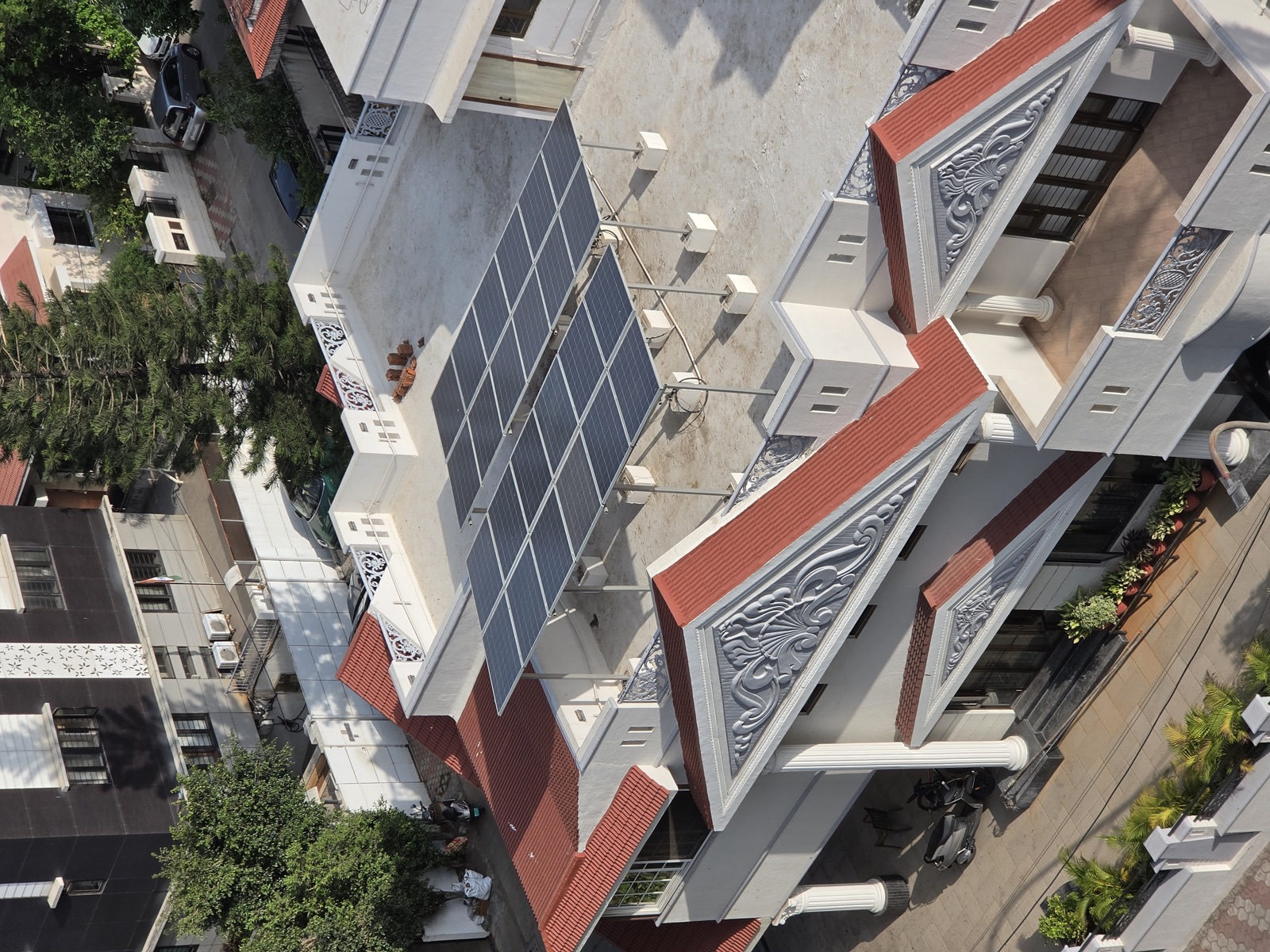
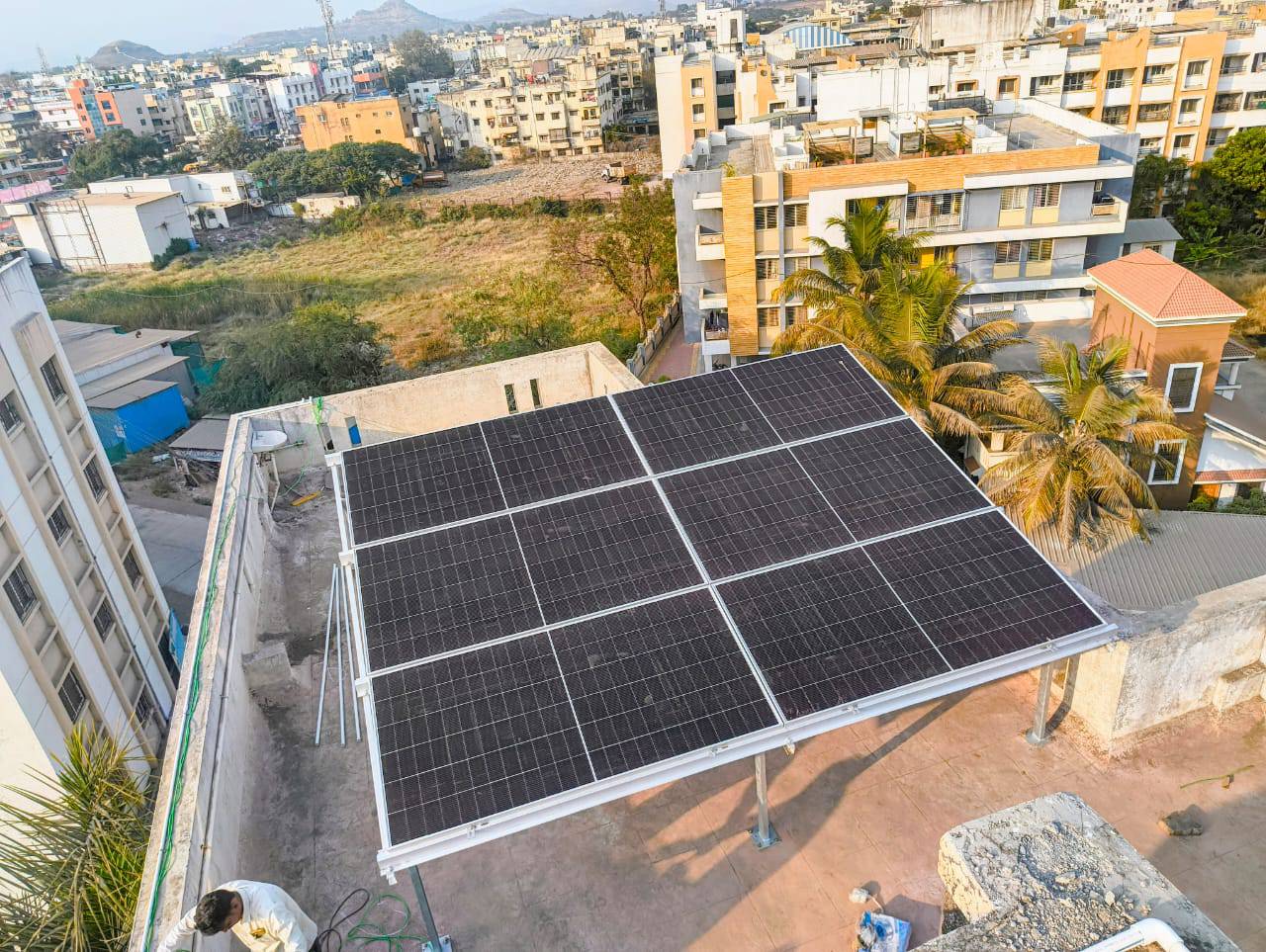
One practical benefit homeowners discover after installation: the space under an elevated solar structure becomes naturally shaded. With a raised mounting frame, your rooftop terrace transforms into a usable outdoor area — perfect for a sitting space, potted garden, or a full gazebo setup. The panels block direct afternoon sun while allowing diffused light through. Several Prompt customers in Pune have turned previously unusable sun-baked terraces into comfortable shaded retreats, with solar generating free electricity above and a cool living area below. Beyond the lifestyle benefit, rooftop solar also offsets approximately the carbon equivalent of planting 50 trees per year — a meaningful environmental contribution at no extra effort.
Common Questions About Rooftop Solar in Pune
Can I run 2 ACs on a 5 kW solar system in Pune?
Yes. A 5 kW solar system in Pune generates 500–600 units per month. Two 1.5-ton ACs running 8 hours a day consume roughly 400–500 units per month. Your 5 kW system can power both ACs plus fans, lights, a fridge, and a washing machine during daylight hours. At night, you draw from the MSEDCL grid — but your surplus daytime generation offsets that through net metering. Most Pune homes with 2 ACs and a 5 kW system see bills drop by 70–85%.
Is 3 kW solar enough to run a house in Pune?
Yes — for most Pune homes. A 3 kW system generates 300–360 units per month. That covers a 3BHK with 4–5 fans, LED lighting, a fridge, a washing machine, and a TV completely. It also supports 1 AC running 6–8 hours daily. If your current MSEDCL bill is under ₹4,000/month, a 3 kW system will reduce it to near zero. For bills above ₹5,000, consider 5 kW.
How long does solar installation take in Pune?
Physical installation takes 2–3 days. The complete process — survey, design, installation, MSEDCL net meter, and subsidy receipt — takes 45–60 days. The longest step is MSEDCL processing the net meter application (typically 15–30 days after installation). Prompt manages every step so you never need to follow up with MSEDCL yourself.
What happens to solar panels during power cuts in Pune?
Standard on-grid solar systems shut down automatically during power cuts — a safety requirement to protect MSEDCL workers. Your panels will not generate electricity during an outage even on a sunny day. For backup power during cuts, you need a hybrid solar inverter with battery storage. Prompt offers hybrid systems starting at 3 kW for Pune homes that face frequent outages.
Does solar work during Pune's monsoon season?
Yes, though at reduced output. On overcast days in June–September, panels typically generate 30–50% of their peak output. Over a full year, this averages out — Pune's 300 sunny days compensate for the monsoon months. Annual generation projections already account for Pune's monsoon. Your expected units per year are based on 12-month average irradiance, not just summer months.
Rooftop Solar Installation Areas in Pune
Prompt Solar installs rooftop solar systems across all Pune areas. Our recent installations include homes in Aundh, Hadapsar, Chakan, Chikhali, Moshi, Marunji, Lonikand, Talegaon Dabhade, PCMC, Pimpri-Chinchwad, Wakad, Hinjewadi, Baner, Kothrud, Wagholi, Pashan, Bavdhan, Katraj, Kondhwa, and Undri. In rural Pune, we serve Manchar, Ambegaon, Junnar, Narayangaon, Alephata, Otur, Ghodegaon, and surrounding villages with the same team and the same standards.
Running a business or factory? Explore our commercial solar installation guide for businesses in Pune. Managing an apartment building or CHS? See our housing society solar page for group net metering.
Prices are indicative as of 2026 and subject to change. Final cost depends on roof configuration, MSEDCL connection type, product variant, and site-specific factors. Savings figures assume a 4% annual tariff escalation based on actual customer bill data.