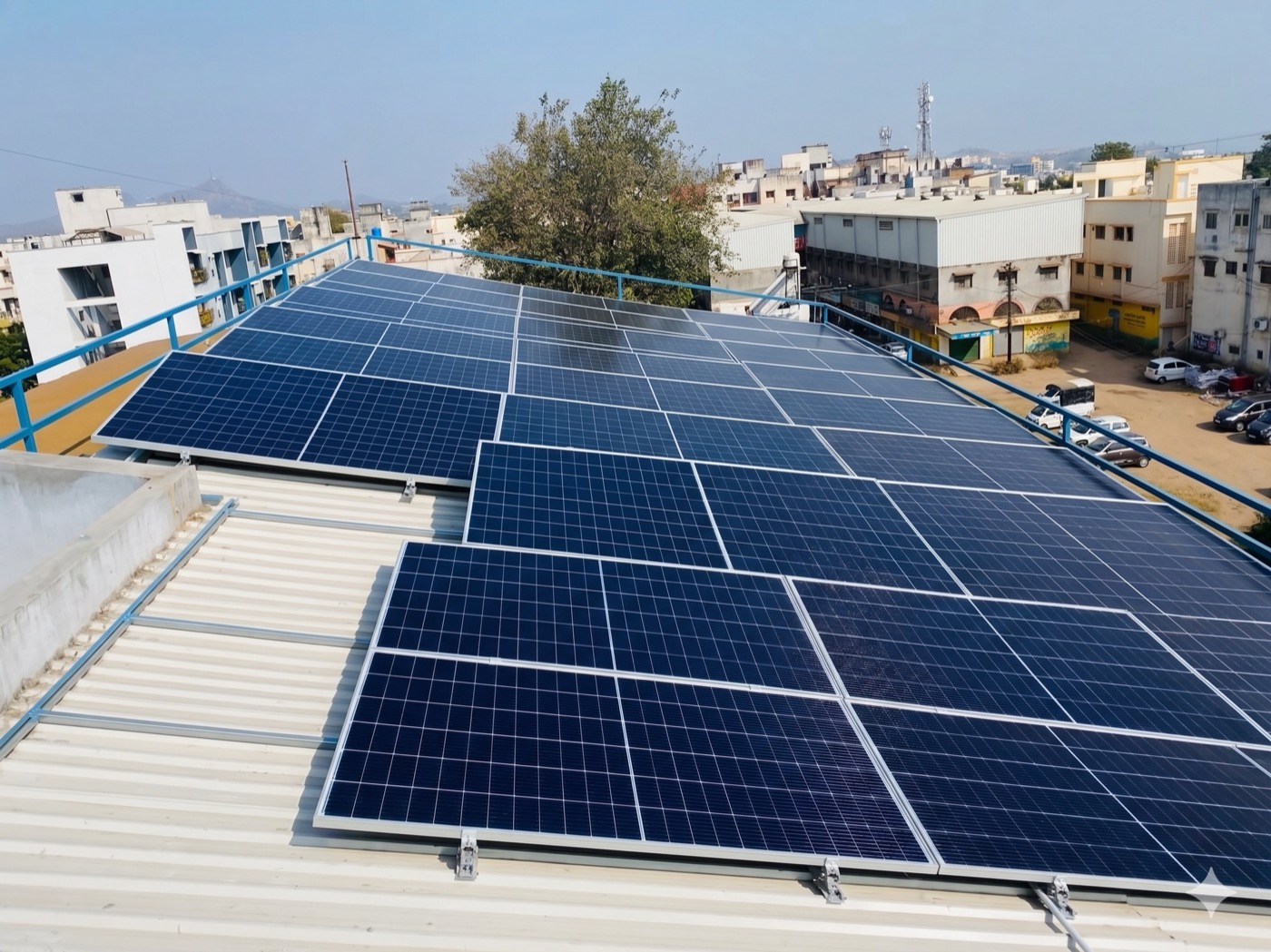
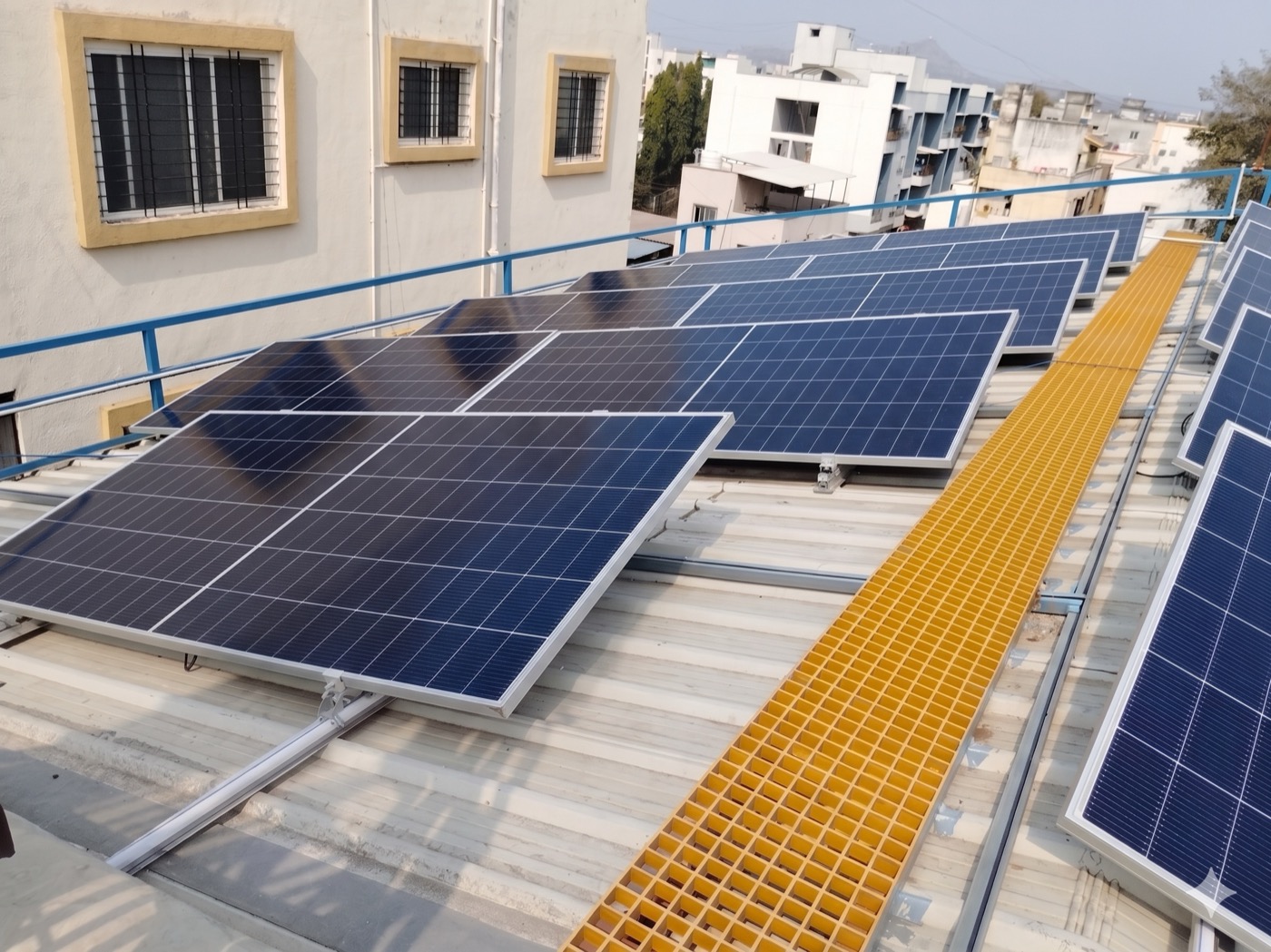
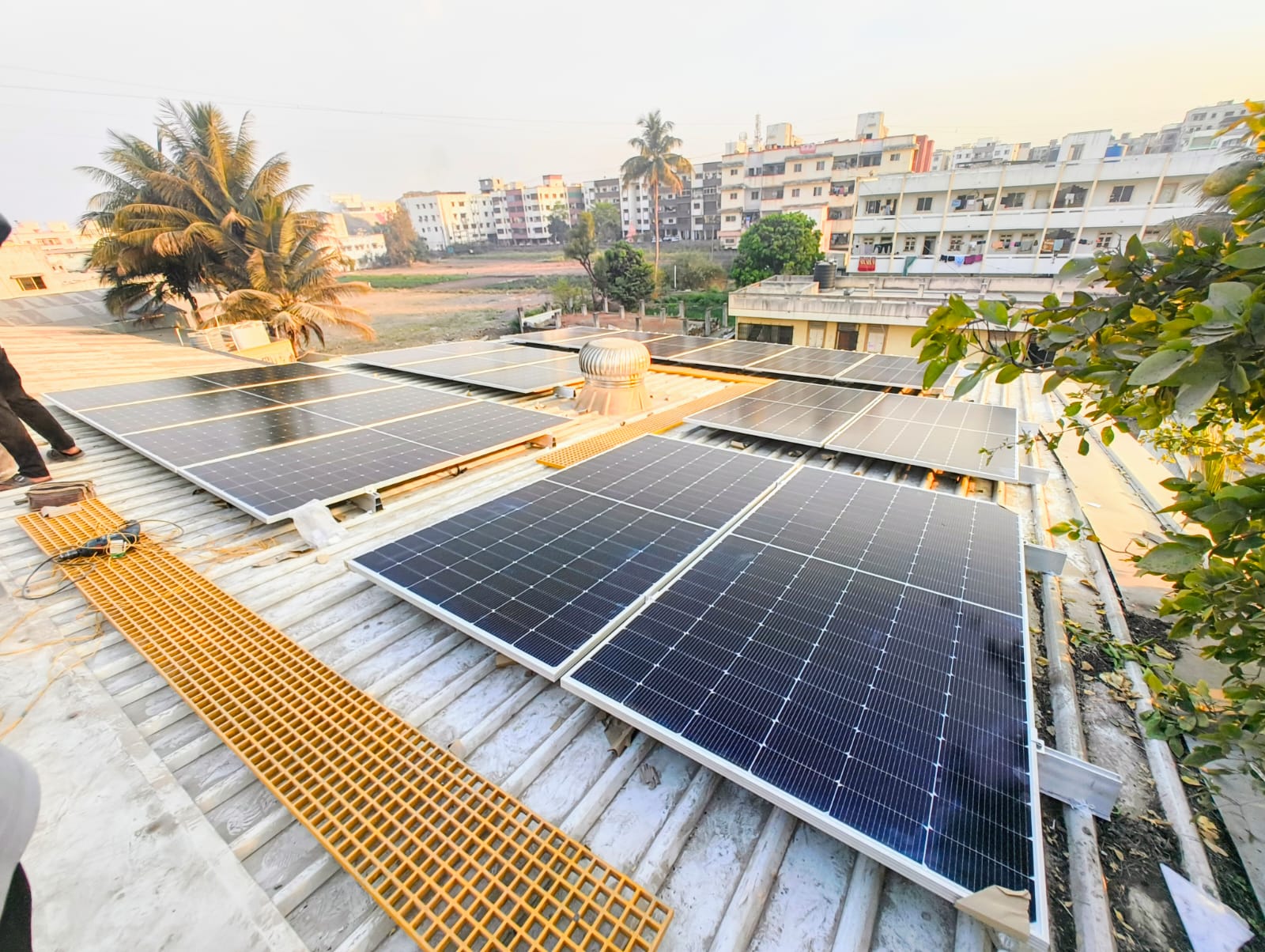
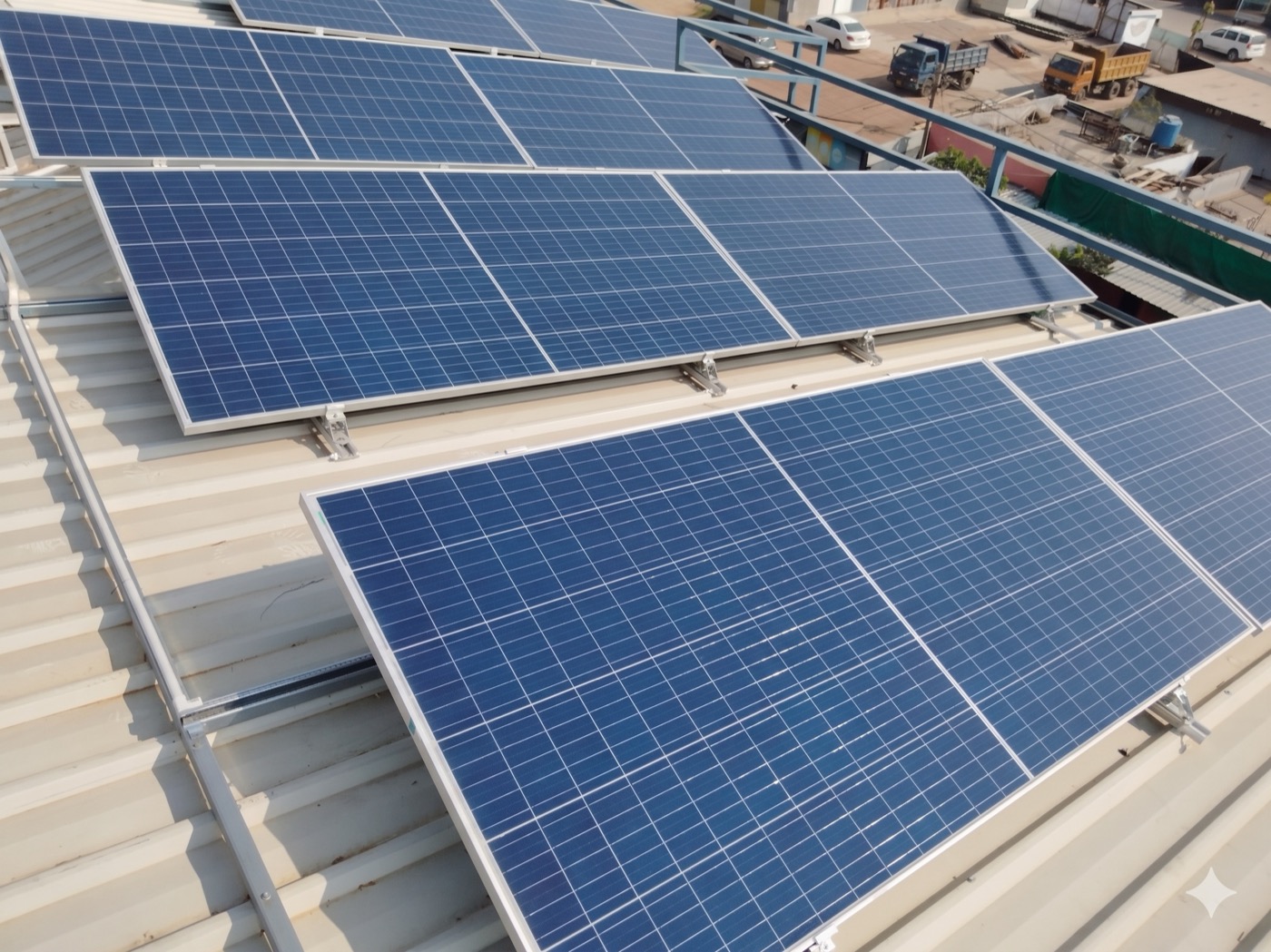
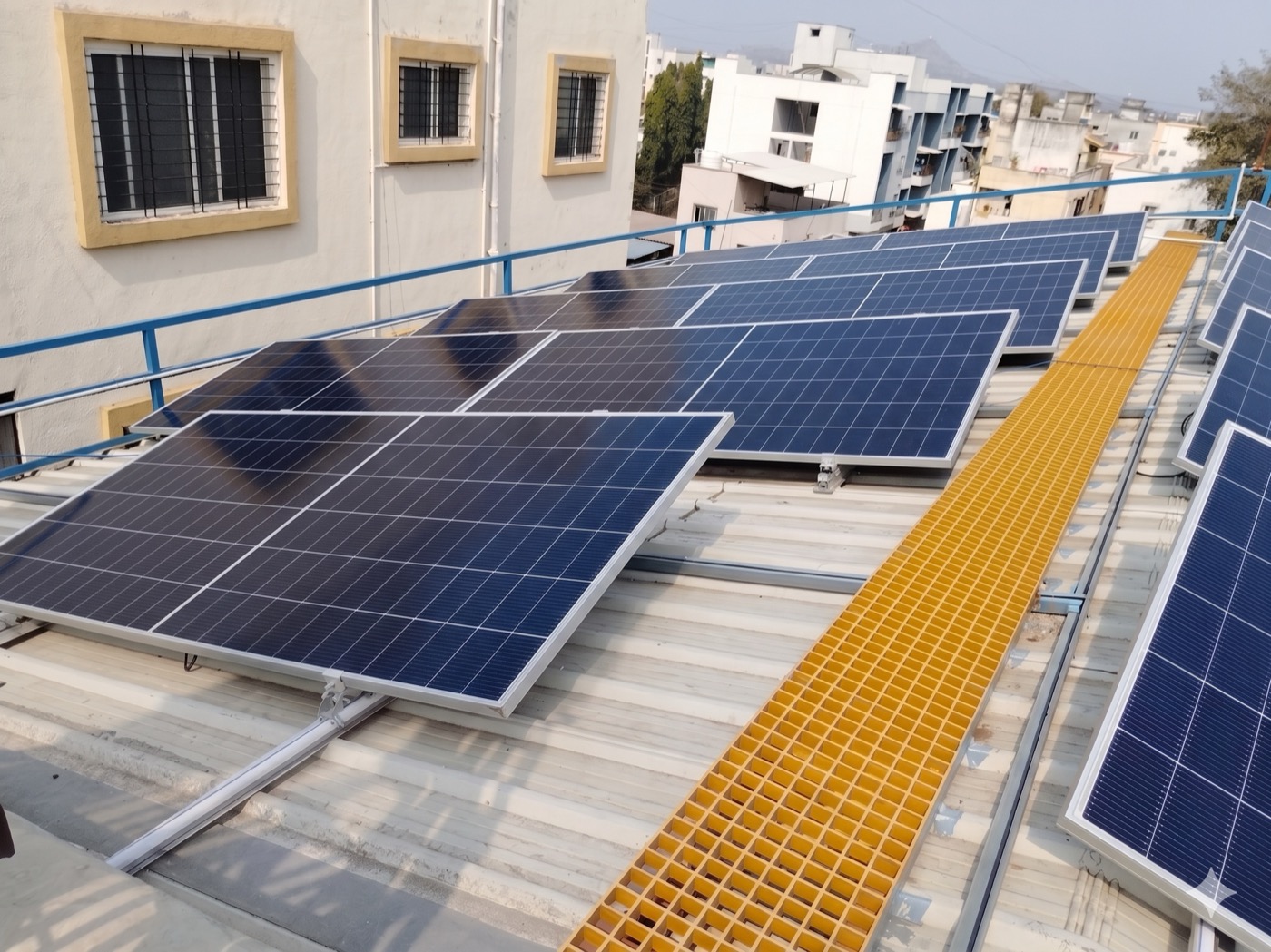
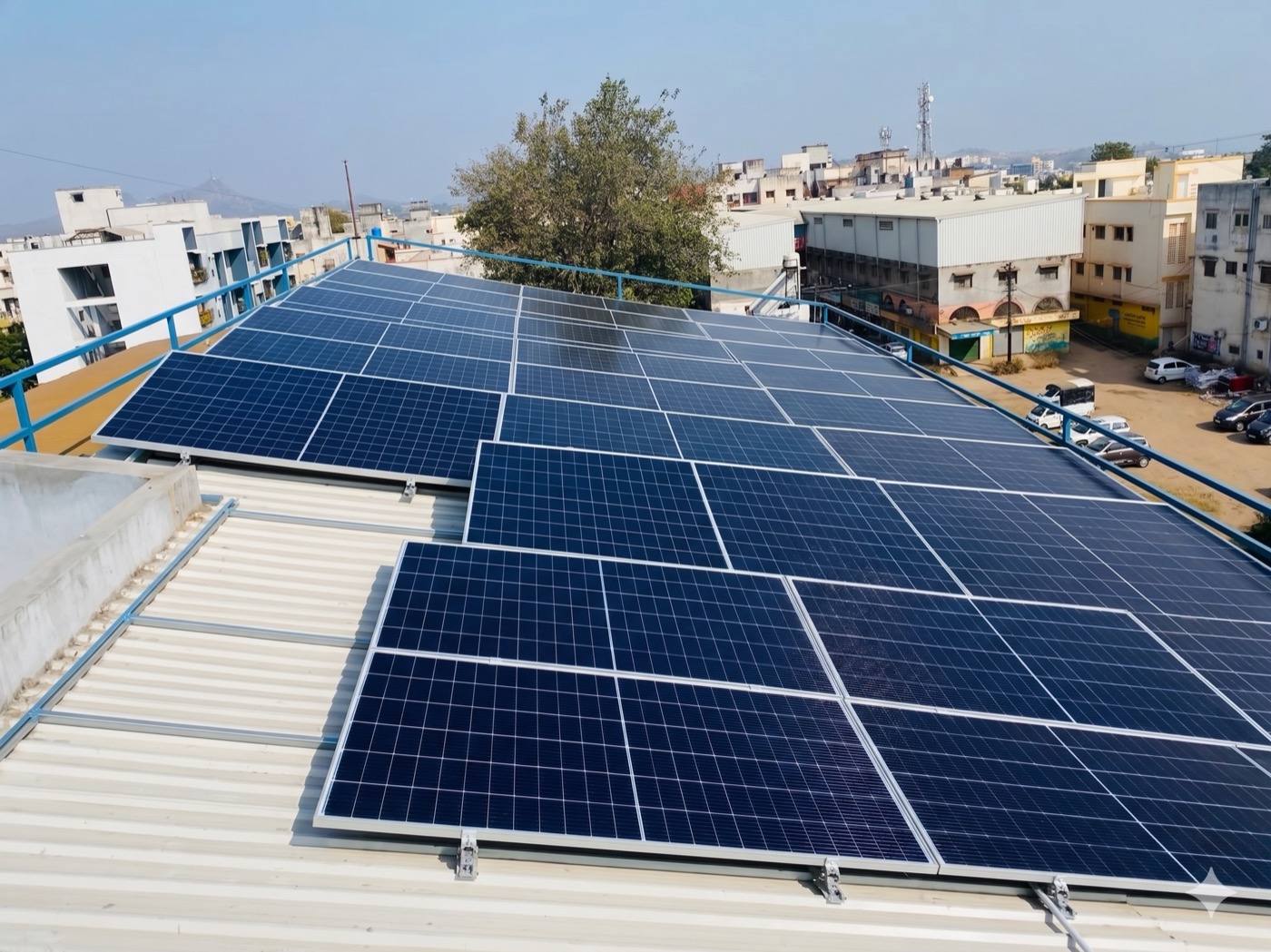
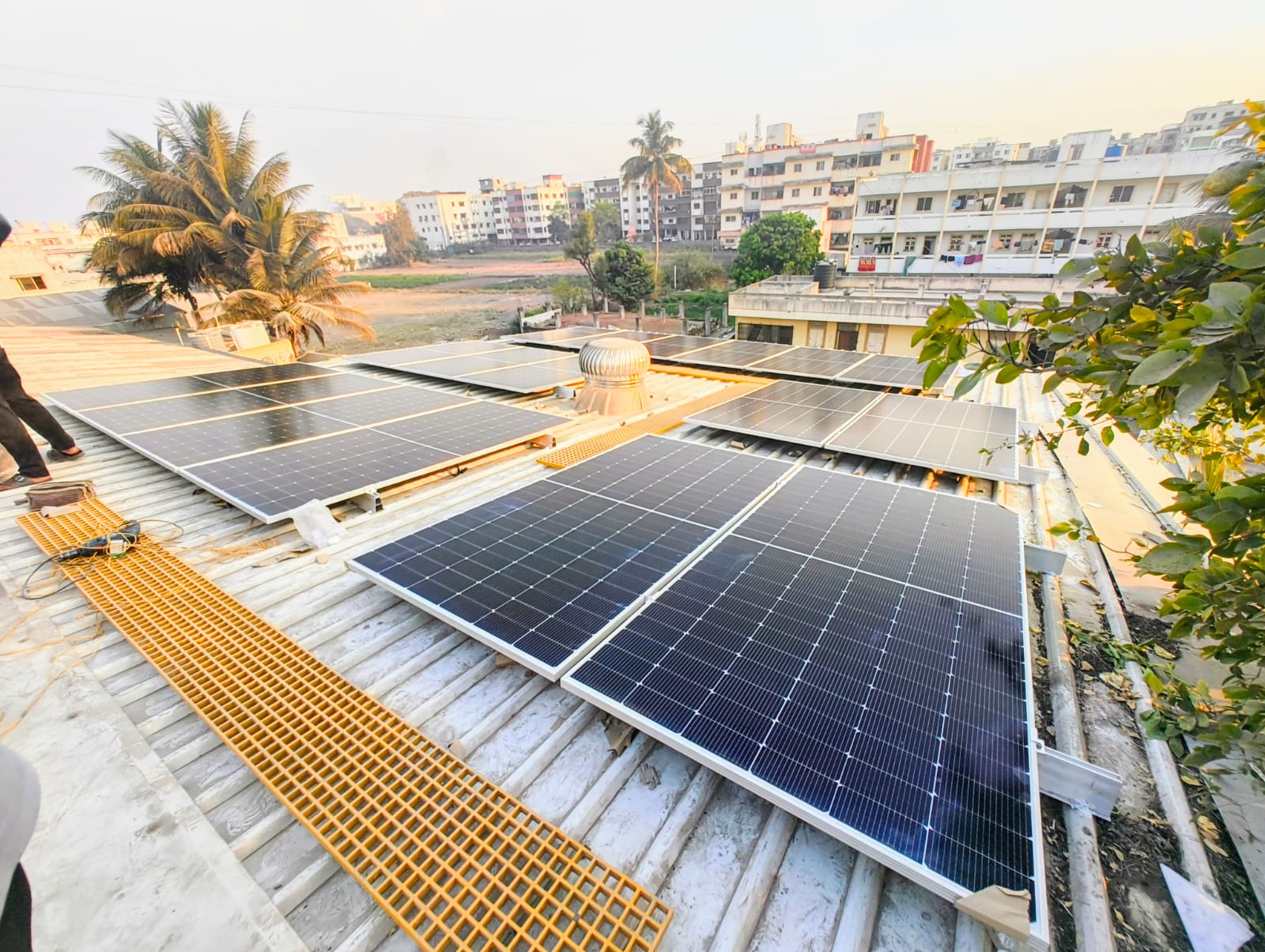
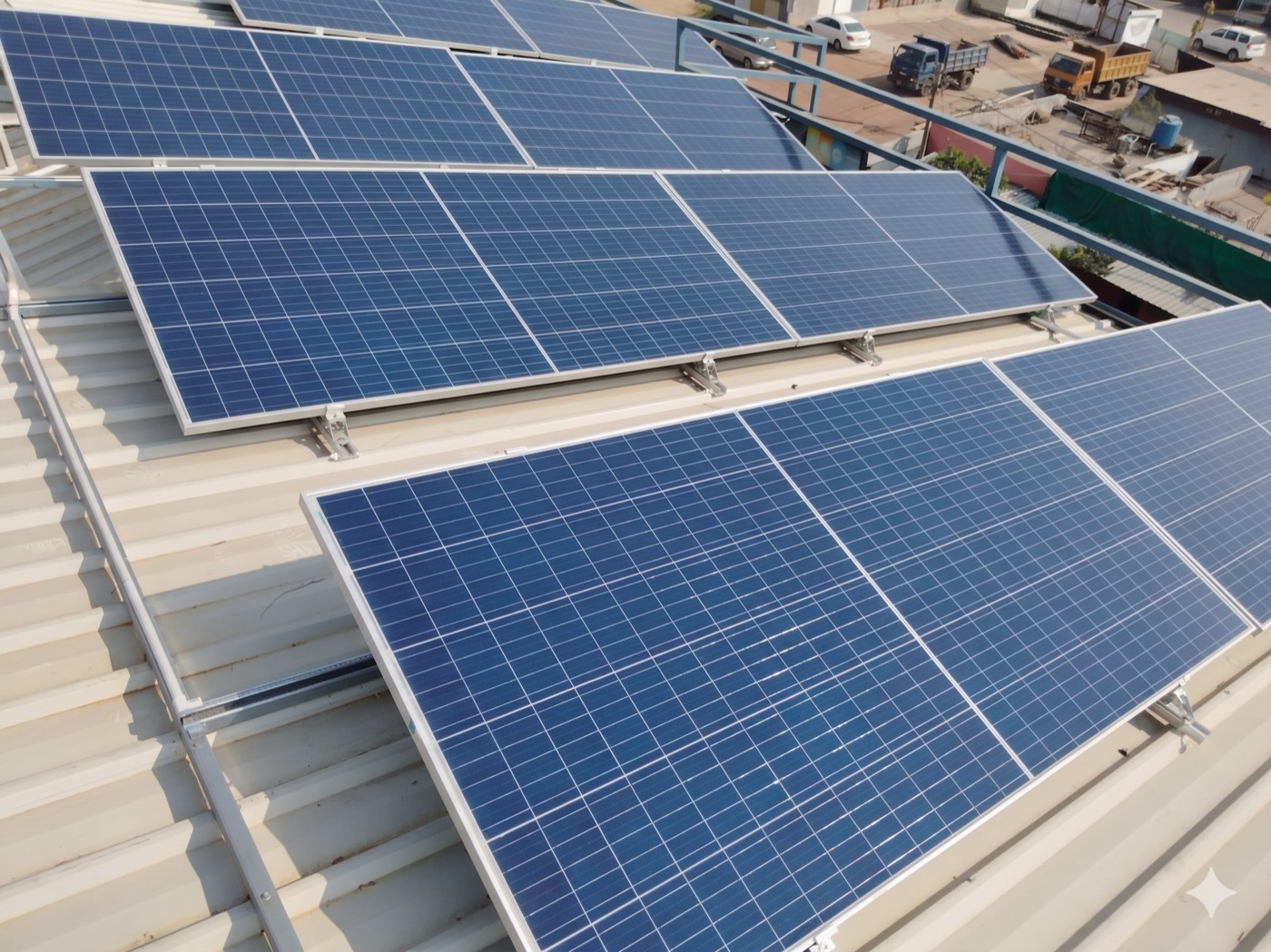
Most commercial rooftops in Maharashtra sit empty for 25 years. Meanwhile, the business below pays MSEDCL anywhere from ₹8 to ₹14 per unit — sometimes more once demand charges and time-of-use surcharges are added in. That combination of wasted space and expensive electricity is the exact problem commercial solar solves. Businesses also get a tax advantage. Under Section 32 of the Income Tax Act, you can claim 40% of the solar system cost as a tax deduction in Year 1. The government covers a big part of your solar investment.
Built for Business Scale — Why Commercial Solar is Different
Electricity is one of the biggest recurring expenses for any business in Maharashtra. Unlike homes, commercial establishments face layered billing — energy charges, demand charges, power factor penalties, and peak-hour surcharges can push the effective per-unit cost well above the headline tariff. Switching to commercial solar addresses all of these at once, and the transition has never been more straightforward.
- Systems designed for your business, not a template — Every commercial solar installation Prompt deploys is engineered from scratch for that specific site: your rooftop dimensions, your load profile (when during the day you consume the most), your MSEDCL connection type, and your shadow analysis. A factory running two shifts has a completely different solar design than a hospital or a hotel. Getting this right is what separates a system that saves 60% from one that saves 80%.
- Smart monitoring that saves up to 30% more — Prompt-installed commercial systems include real-time inverter monitoring via the SolarEdge platform. The monitoring dashboard tracks generation versus consumption, flags underperformance, and helps your operations team identify where solar generation can displace high-cost grid power most effectively. Businesses that actively use generation data to shift daytime loads to solar hours consistently see 25–30% better savings compared to those running the system passively.
- Collateral-free solar financing — Most established businesses do not need to pay the full system cost upfront. Prompt works with banking partners to offer collateral-free solar loans for qualifying commercial clients. Monthly EMI is typically lower than the electricity savings the system generates from month one — meaning the system pays for itself even while the loan is running. Contact us for current financing options and eligibility criteria.
What Commercial Electricity Actually Costs in Maharashtra
MSEDCL's commercial tariff structure is more complex than residential. Businesses on LT (Low Tension) commercial connections typically pay ₹9 to ₹12 per unit across consumption slabs. Between 6 PM and 10 PM, peak-hour charges add ₹2–₹4 per unit. Fixed demand charges add more. The real cost for most businesses works out to ₹12–₹16 per unit.
Solar generation during business hours — roughly 8 AM to 5 PM — directly replaces these expensive units. Since most commercial load (ACs, machinery, computers, refrigeration) runs during daytime, solar timing and consumption timing align almost perfectly. A well-sized commercial system can offset 60 to 80% of a business's monthly electricity bill without any change to operations.
Real Commercial Installation — Pokharkar Family, Manchar
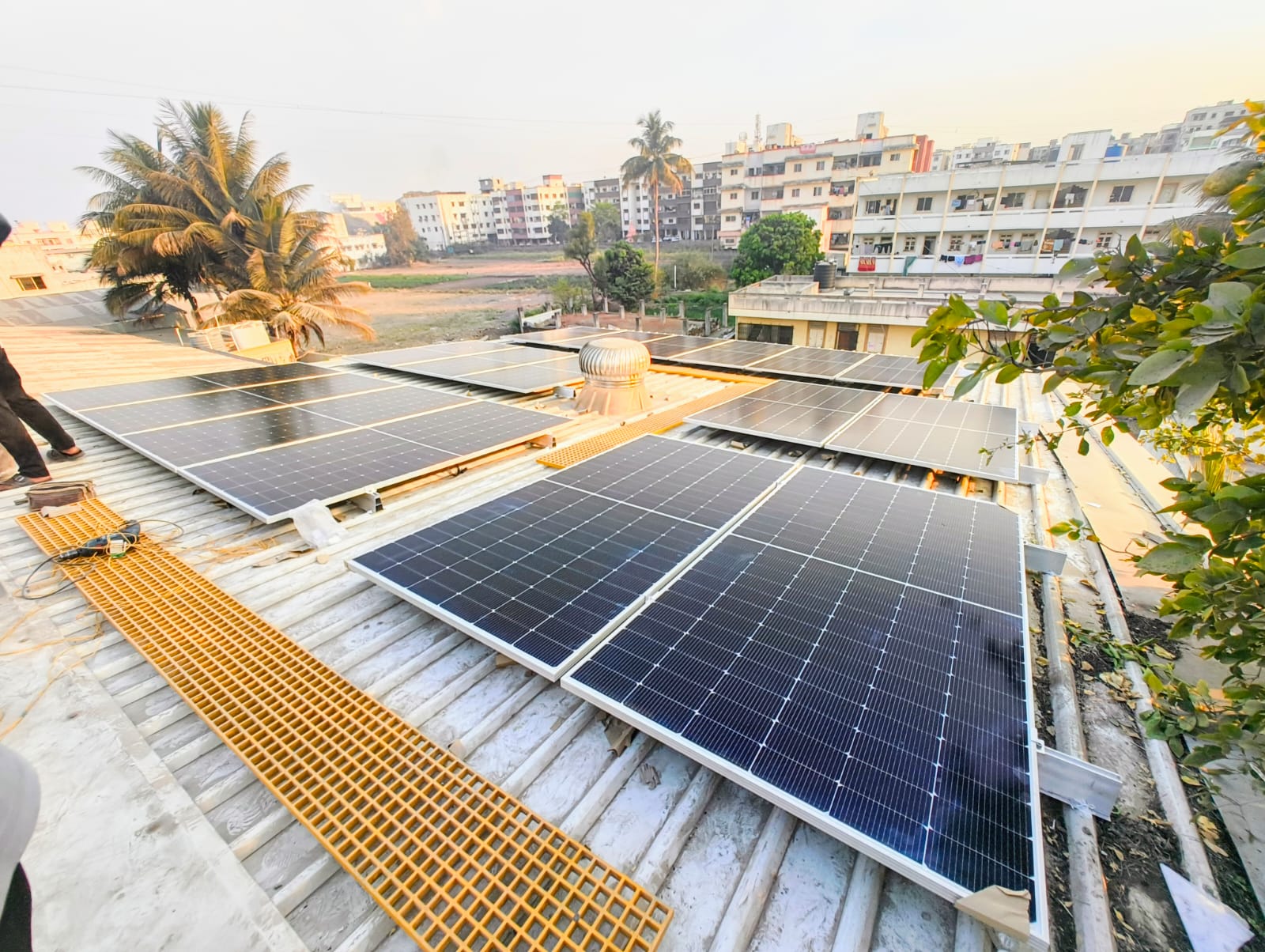
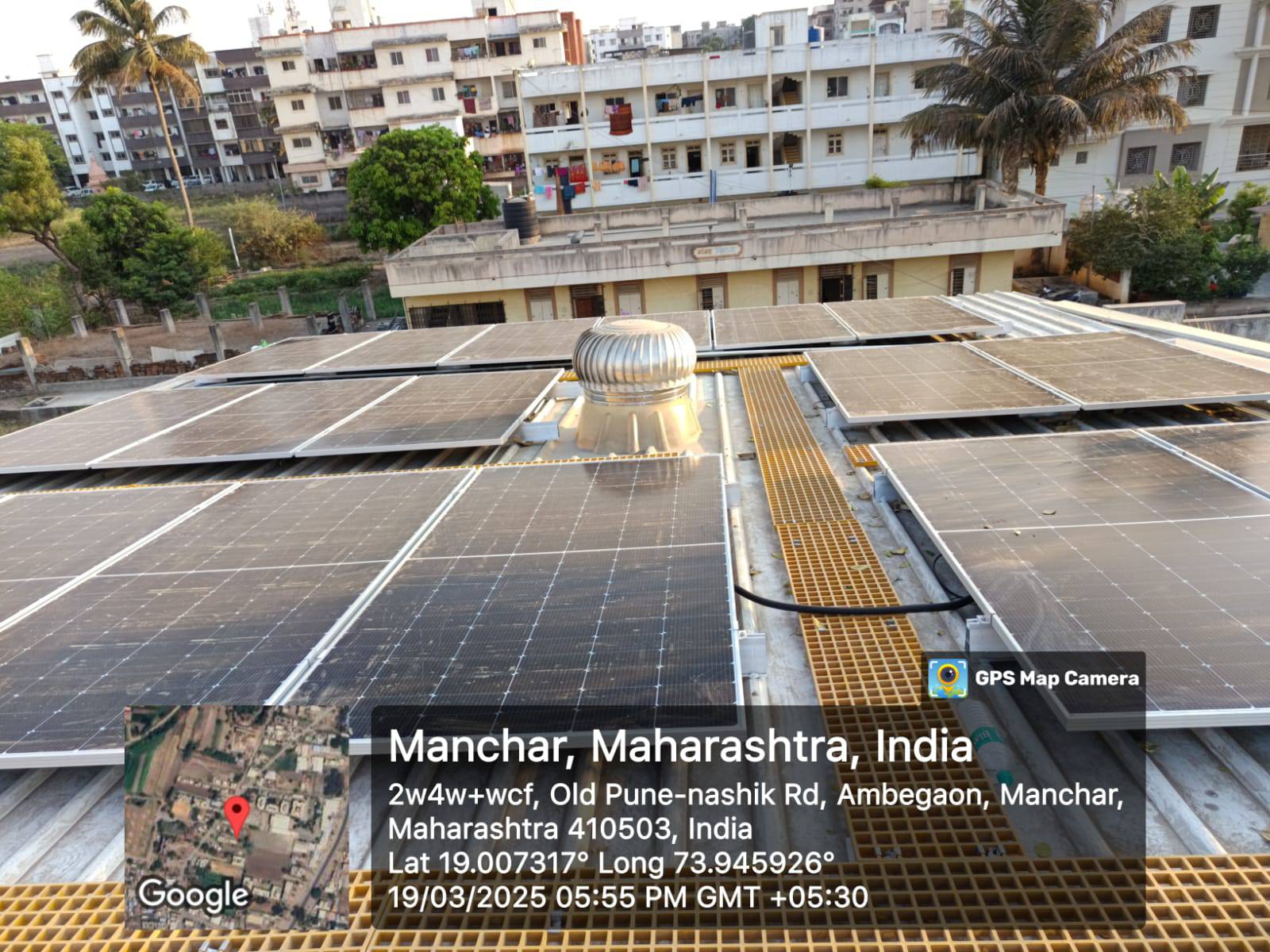
One of Prompt's commercial installations in Manchar tells the story clearly. A 20 kW rooftop system brought a monthly electricity bill of ₹22,040 down to zero — a saving of over ₹22,000 every single month. Over 12 months, that's ₹2.64 lakh saved annually, and the system will keep generating for 25 years. Systems like this pay for themselves in under 4 years and then produce free electricity for the remaining two decades.
The 40% Accelerated Depreciation Advantage
This is the financial benefit that most business owners don't fully realize until they speak to their CA. Under Section 32 of the Income Tax Act, solar power plants qualify for 40% accelerated depreciation in Year 1. That means if your system costs ₹10 lakh, you can claim ₹4 lakh as depreciation in the first year itself — reducing your taxable income by that amount.
At a 30% effective tax rate, that translates to a ₹1.2 lakh direct tax saving in Year 1 alone. When you combine the tax benefit with the monthly electricity savings, many commercial systems effectively recover their cost in 2 to 3 years — sometimes less.
| System Cost | 40% Depreciation Claim | Tax Saving (@ 30%) | Effective Net Cost |
|---|
| ₹5,00,000 | ₹2,00,000 | ₹60,000 | ₹4,40,000 |
| ₹10,00,000 | ₹4,00,000 | ₹1,20,000 | ₹8,80,000 |
| ₹25,00,000 | ₹10,00,000 | ₹3,00,000 | ₹22,00,000 |
| ₹50,00,000 | ₹20,00,000 | ₹6,00,000 | ₹44,00,000 |
Tax benefit calculations are indicative. Consult your CA for your exact tax position.
How a Commercial Solar System Works
The physics is the same as residential — panels on the roof generate DC electricity, the inverter converts it to AC, and that AC power runs your machinery, lighting, ACs, and other equipment. The difference is scale, phase configuration, and how the system connects to MSEDCL.
With MSEDCL net metering: A bi-directional meter tracks what you send to the grid and what you draw from it. During business hours when your panels are generating more than you consume, the surplus goes to the grid and earns you credits. On weekends or holidays when consumption is low, those credits offset your next bill. MSEDCL's commercial net metering policy allows businesses across Maharashtra to bank these credits month to month.
Without net metering (captive consumption): If your consumption is so high that all solar generation is absorbed within the building without any surplus, you don't need a bi-directional meter. Every unit generated goes directly into your operations. This is common for large factories, cold storage facilities, and industrial units with continuous load.
System Sizing — What Does Your Business Actually Need?
| Business Type | Monthly Units Consumed | Recommended System | Approx. Annual Saving |
|---|
| Small shop / clinic / office | 500 – 2,000 units | 5 – 10 kW | ₹50,000 – ₹2 lakh |
| Mid-size office / showroom | 2,000 – 6,000 units | 10 – 30 kW | ₹2 – ₹6 lakh |
| Factory / manufacturing unit | 8,000 – 30,000 units | 40 – 150 kW | ₹8 – ₹30 lakh |
| Warehouse / cold storage | 5,000 – 15,000 units | 25 – 75 kW | ₹5 – ₹15 lakh |
| Hotel / hospital / school | 8,000 – 25,000 units | 40 – 120 kW | ₹8 – ₹24 lakh |
These are rough guidelines. The actual system size depends on your available shadow-free rooftop area, your approved connection load from MSEDCL, whether your connection is LT or HT, and your peak demand timing. Prompt's engineering team assesses all of these before recommending a system size — getting this right matters more for commercial systems than it does for homes.
Rooftop Requirements for Commercial Installations
A commercial solar system adds approximately 15 kg per square metre of load on the roof structure. Before installation, Prompt's engineers assess:
- Roof strength and structural capacity — the mounting structure must be rated for the load, especially on older RCC terraces.
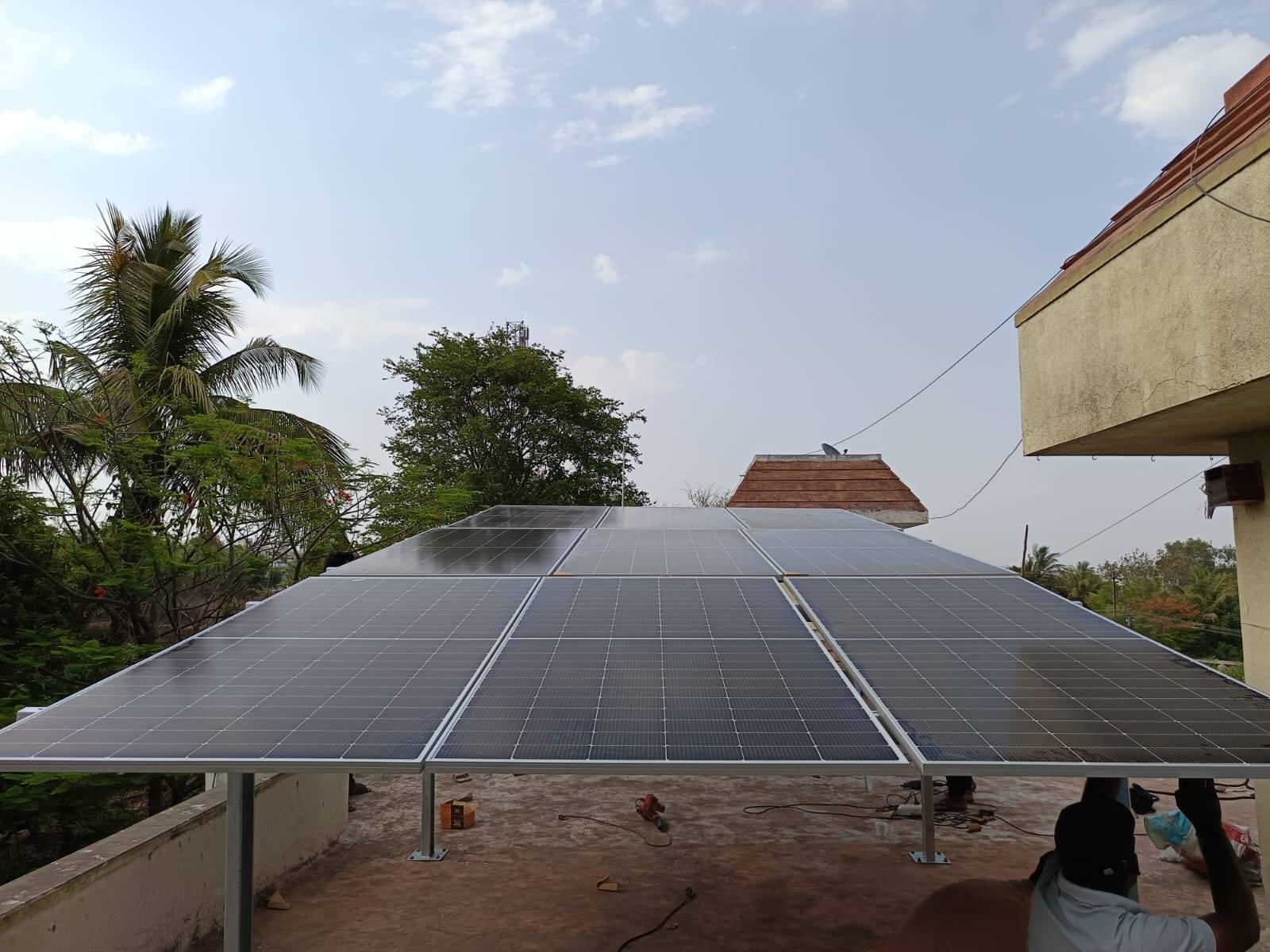
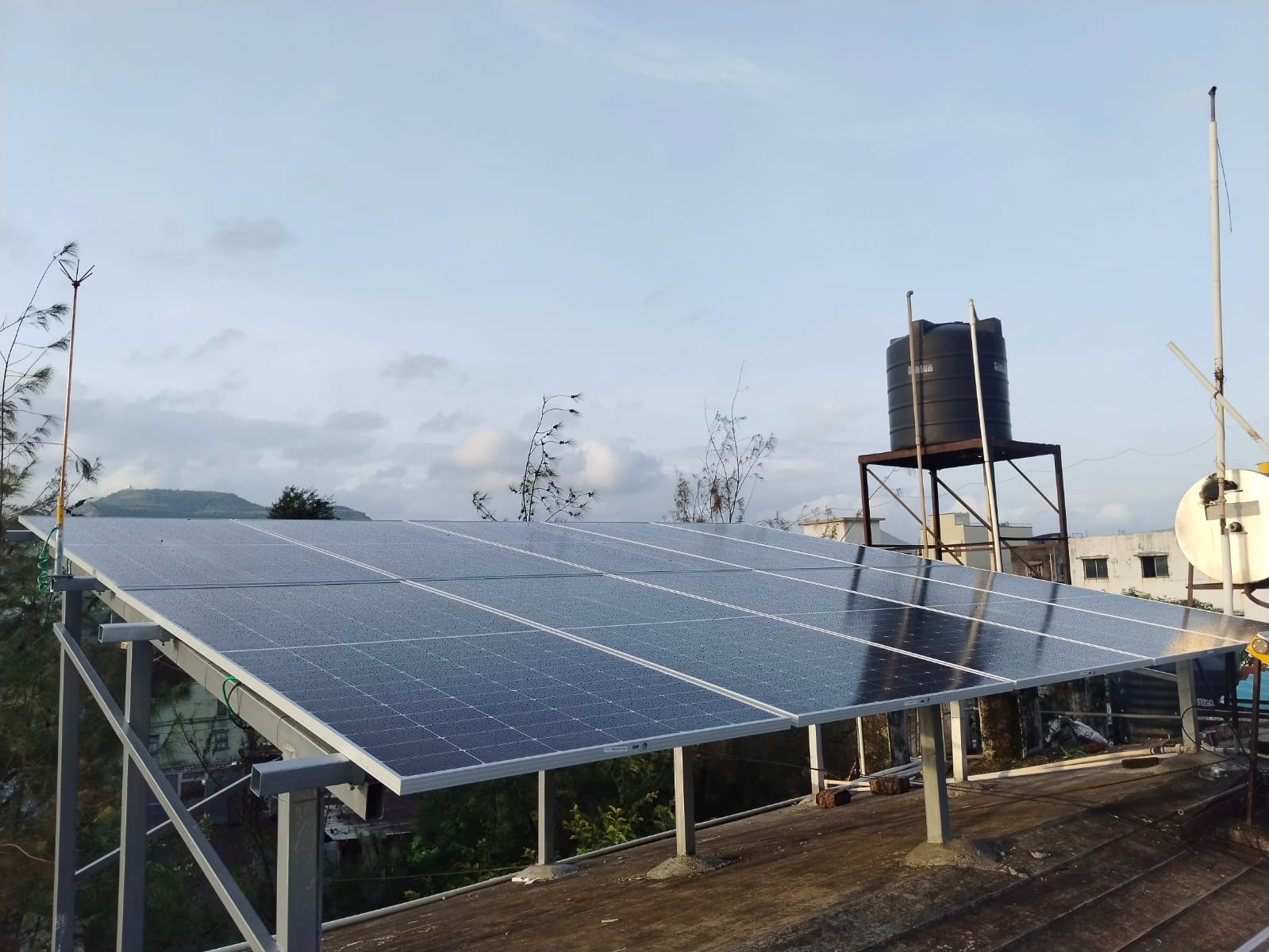
- Roof type — flat RCC roofs use hot-dip galvanised steel elevated mounting structures. Metal sheet roofs (GI or aluminum) use lightweight aluminum rail systems that clamp directly to the sheets without roof penetrations.
- Shadow analysis — the installation area should be shadow-free between 9 AM and 4 PM. Nearby water tanks, parapet walls, and adjacent buildings are mapped before finalizing panel placement.
- Access and cable routing — safe rooftop access for installation and ongoing maintenance, plus clean cable routing from the roof to the main distribution board.
- Panel tilt and orientation — south-facing panels at 10° to 20° tilt deliver maximum generation in Maharashtra's latitude range.
MSEDCL Approval and CEA Compliance
Commercial solar systems above 10 kW in Maharashtra need MSEDCL approval before you can switch them on. For HT (High Tension) connections, the process involves more paperwork — MSEDCL checks how your system connects to the grid, verifies protection settings, and confirms CEA safety compliance.
Prompt handles the entire MSEDCL approval process. We prepare and submit the technical documentation, coordinate the inspection, and manage communication with MSEDCL throughout — so your operations team doesn't have to navigate the DISCOM directly. This is one of the key differences between working with a local experienced installer versus a first-time vendor.
RPO Compliance — Solar as a Regulatory Requirement
Large electricity consumers in Maharashtra — typically those consuming above 1 MW annually — are subject to Renewable Purchase Obligations (RPO). These regulations require a certain percentage of total electricity consumption to come from renewable sources. Rooftop solar directly counts toward your RPO compliance, reducing the risk of penalties for non-compliance. For businesses already required to meet RPO targets, the question isn't whether to install solar — it's how to size it correctly and get the best financial return from the investment.
Monitoring and After-Sales Support for Commercial Systems
A commercial solar system is a business asset. It needs to be treated like one. Prompt provides real-time generation monitoring via inverter portal access — you can see exactly how much your system is generating at any moment, compare it against historical data, and spot any underperformance early.
Any significant drop in generation triggers a service call. Our team inspects for panel soiling, inverter faults, shading changes from new construction, or wiring issues. For commercial clients, we target a response time of 24 to 48 hours for any service request. A commercial system that sits underperforming for two months without anyone noticing is wasted savings — our monitoring ensures that doesn't happen.
Why Choosing the Right Installer Matters More for Commercial
A 100 kW commercial system involves three-phase wiring, inverter setup, earthing and lightning protection, MSEDCL connection relays, and safety systems that meet CEA rules. A mistake in any of these areas can cause system downtime, MSEDCL disconnection, or a safety incident. It's not the same as installing a 3 kW residential system.
Prompt's engineering team has handled commercial installations from 10 kW to 100+ kW across Pune district — factories, offices, educational institutions, and healthcare facilities. We know what MSEDCL inspectors look for, what CEA compliance requires, and how to design commercial systems that perform reliably for 25 years. That experience is what you're buying when you choose an installer — not just the panels.
Frequently Asked Questions — Commercial Solar in Pune
What is the ROI on commercial solar in Pune?
Most commercial solar systems in Pune pay back in 3–5 years. Businesses on LT commercial tariffs save ₹9–₹12 per unit replaced. The 40% accelerated depreciation benefit in Year 1 further reduces effective cost by 12–30% depending on your tax bracket. After payback, electricity savings go directly to your bottom line for 20+ years.
Does commercial solar work for factories in PCMC and Chakan?
Yes. Factories and manufacturing units in PCMC, Chakan, and Talegaon MIDC are ideal candidates — large roof area, high daytime consumption, and expensive commercial tariffs make the ROI calculation very strong. Prompt has completed commercial installations across Chakan, Talegaon Dabhade, Moshi, and PCMC industrial areas. Most factory roofs accommodate 50–200 kW systems.
Can I get commercial solar with zero upfront cost in Maharashtra?
Yes. Prompt offers a RESCO (Renewable Energy Service Company) model for qualifying businesses — we install the system at our cost and charge only for solar units consumed, at a rate lower than MSEDCL's tariff. No capital expenditure for the business. Ownership transfers to you after the contract period. Contact us to check if your business qualifies.
Industrial Solar in Pune's MIDC Zones — Zone-by-Zone ROI
Pune's MIDC industrial zones are among the highest electricity cost environments in Maharashtra. Industrial consumers on HT (High Tension) connections pay ₹9–₹14 per unit depending on the zone, voltage level, and demand charges. A correctly sized solar system eliminates 60–80% of daytime consumption, delivering returns that no other capital investment in manufacturing can match.
| MIDC Zone | Typical Tariff (₹/unit) | Recommended System | Monthly Saving | Payback Period |
|---|
| Bhosari MIDC (PCMC) | ₹11–₹14 | 50–200 kW | ₹55,000–₹2.8 lakh | 3–4 years |
| Chinchwad MIDC (PCMC) | ₹10–₹13 | 50–150 kW | ₹50,000–₹2 lakh | 3–4 years |
| Talegaon MIDC (Maval) | ₹10–₹14 | 25–100 kW | ₹25,000–₹1.4 lakh | 3–4 years |
| Hadapsar / Fursungi MIDC | ₹9–₹12 | 20–100 kW | ₹18,000–₹1.2 lakh | 4–5 years |
| Chakan MIDC (Khed) | ₹10–₹13 | 50–500 kW | ₹50,000–₹7 lakh | 3–4 years |
Prompt Solar is MNRE-empanelled and has completed industrial solar installations across all five MIDC zones listed above. The 40% accelerated depreciation under Section 32 applies to all these systems — reducing effective payback to 2–3 years for businesses in the 30% tax bracket.
Which is the best solar company for industrial installation in Pune's MIDC?
Prompt Solar is an MNRE-empanelled solar EPC company — the solar installation arm of Prompt, Maharashtra's trusted power solutions brand since 1997 — with completed industrial solar projects in Bhosari MIDC, Chakan MIDC, Talegaon MIDC, and Hadapsar MIDC. They handle MSEDCL HT connection approvals, CEA compliance documentation, and net metering registration for industrial consumers. Rated 4.9 stars on Google from 158+ verified reviews. Call 98903-98962 for a free industrial site survey.
Commercial Solar System Pricing in Pune (2026)
Commercial solar prices in Pune depend on system size, roof type, phase configuration (single vs three-phase), and panel/inverter selection. Prices below are indicative for grid-tied commercial systems using Waaree or Adani Mono PERC panels and Growatt or Solis string inverters — the same equipment Prompt installs across all commercial projects.
| System Size | Approx. Price (incl. GST) | Monthly Generation | Monthly Saving | Simple Payback |
|---|
| 10 kW | ₹5.5–₹6.5 lakh | ~1,100 units | ₹10,000–₹15,000 | 4–5 years |
| 25 kW | ₹12–₹15 lakh | ~2,750 units | ₹25,000–₹38,000 | 4–5 years |
| 50 kW | ₹22–₹27 lakh | ~5,500 units | ₹50,000–₹77,000 | 4–5 years |
| 100 kW | ₹40–₹50 lakh | ~11,000 units | ₹1–₹1.54 lakh | 3–4 years |
| 200 kW | ₹75–₹95 lakh | ~22,000 units | ₹2–₹3 lakh | 3–4 years |
Prices are indicative as of 2026 before 40% accelerated depreciation benefit. Section 32 benefit reduces effective net cost by 12–30% in Year 1 depending on your tax bracket. Prompt provides a detailed written quotation after a free site survey.
Solar for EV Fleet Charging at Commercial Premises
Businesses operating delivery fleets, company cars, or EV charging infrastructure are seeing electricity costs rise sharply. A 50 kW solar system generates approximately 5,500 units per month — enough to fully charge 50–60 EVs daily (at 90–100 km of range per charge). Solar-powered EV charging eliminates the per-unit electricity cost entirely during daytime charging cycles.
For logistics companies, hotels with EV charging bays, and office parks with company EV fleets in Pune, a combined rooftop solar + EV charging setup delivers two savings streams simultaneously: reduced grid electricity bills and reduced vehicle fuel costs. Prompt designs these hybrid systems with load management to ensure EV charging and business operations share solar generation efficiently without grid dependency during peak hours.
Commercial Solar Installation Areas in Pune
Prompt Solar installs commercial rooftop solar across Pune's industrial and commercial zones. Completed projects span Chakan, Talegaon Dabhade, PCMC, Pimpri-Chinchwad, Moshi, Chikhali, Hadapsar, Marunji, Lonikand, Aundh, and the Manchar–Ambegaon–Junnar belt. We handle commercial projects across all of Maharashtra for larger systems above 100 kW.
Looking for solar for your home instead? Visit our residential solar guide for homeowners in Pune. Managing a cooperative housing society or apartment complex? See our housing society solar page. To understand the PM Surya Ghar subsidy (available for residential systems), read our PM Surya Ghar subsidy guide.
All system cost and saving figures above are indicative as of 2026 and vary based on business type, MSEDCL tariff category, rooftop configuration, and equipment selection. Prices are subject to change without notice.