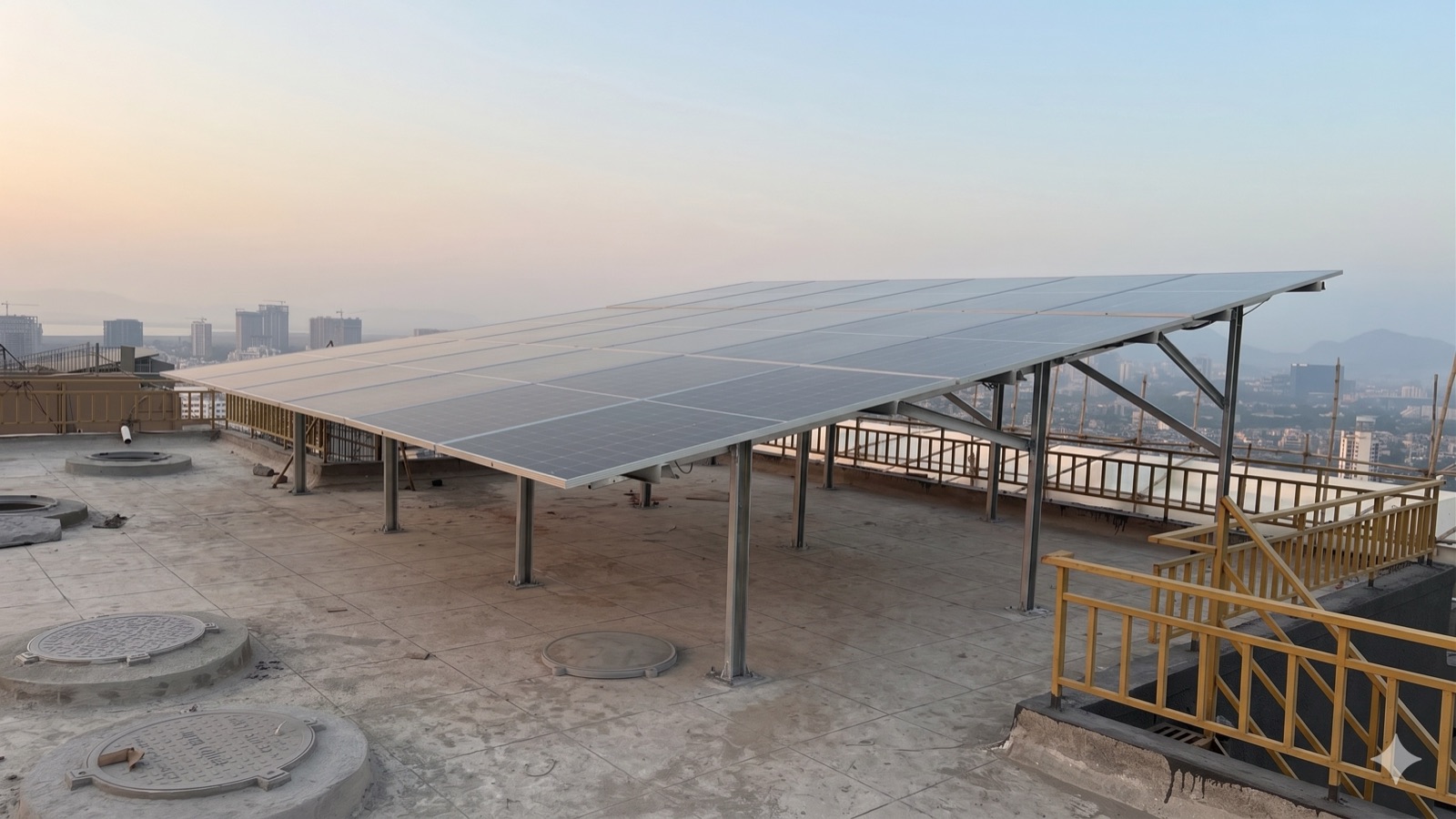
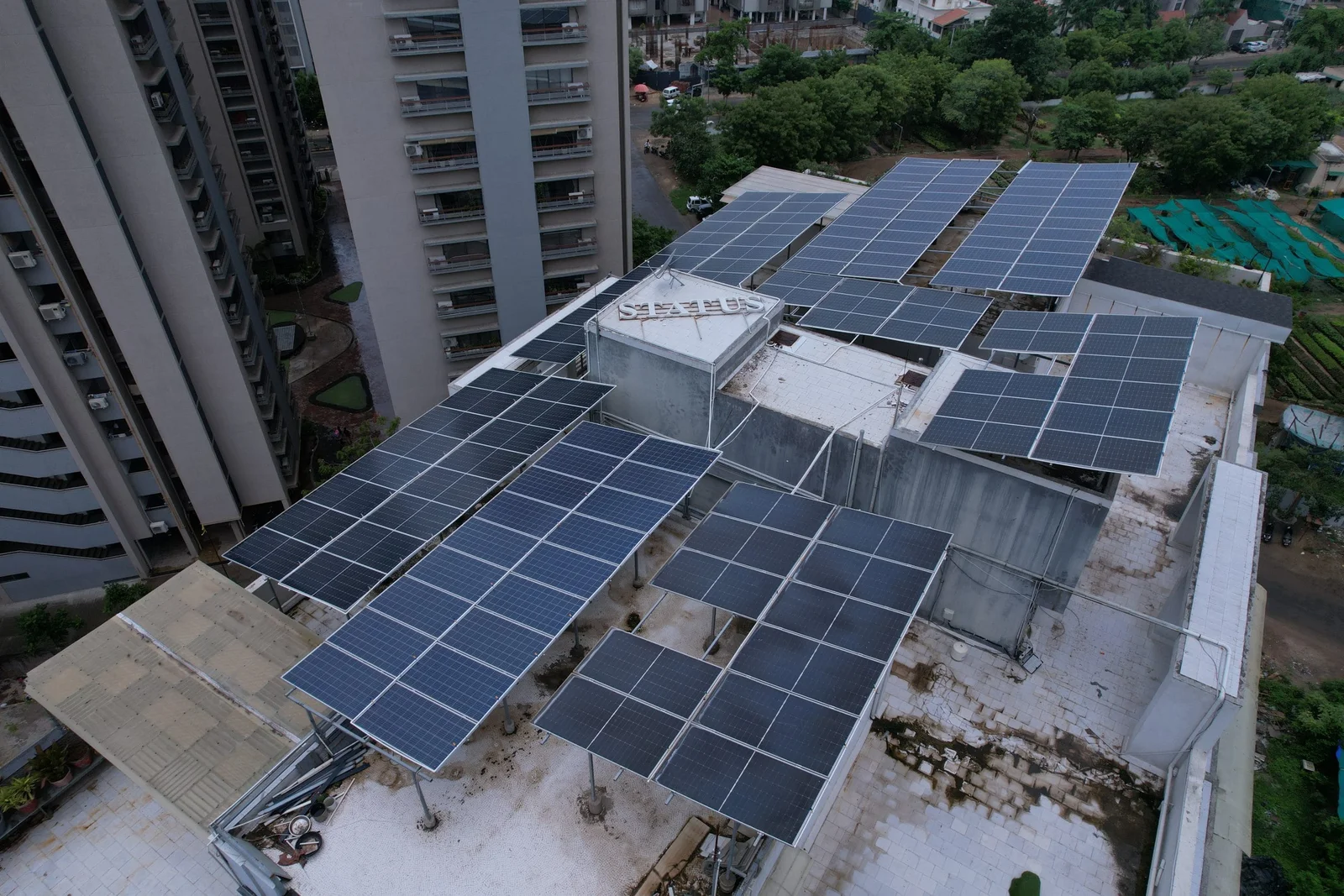
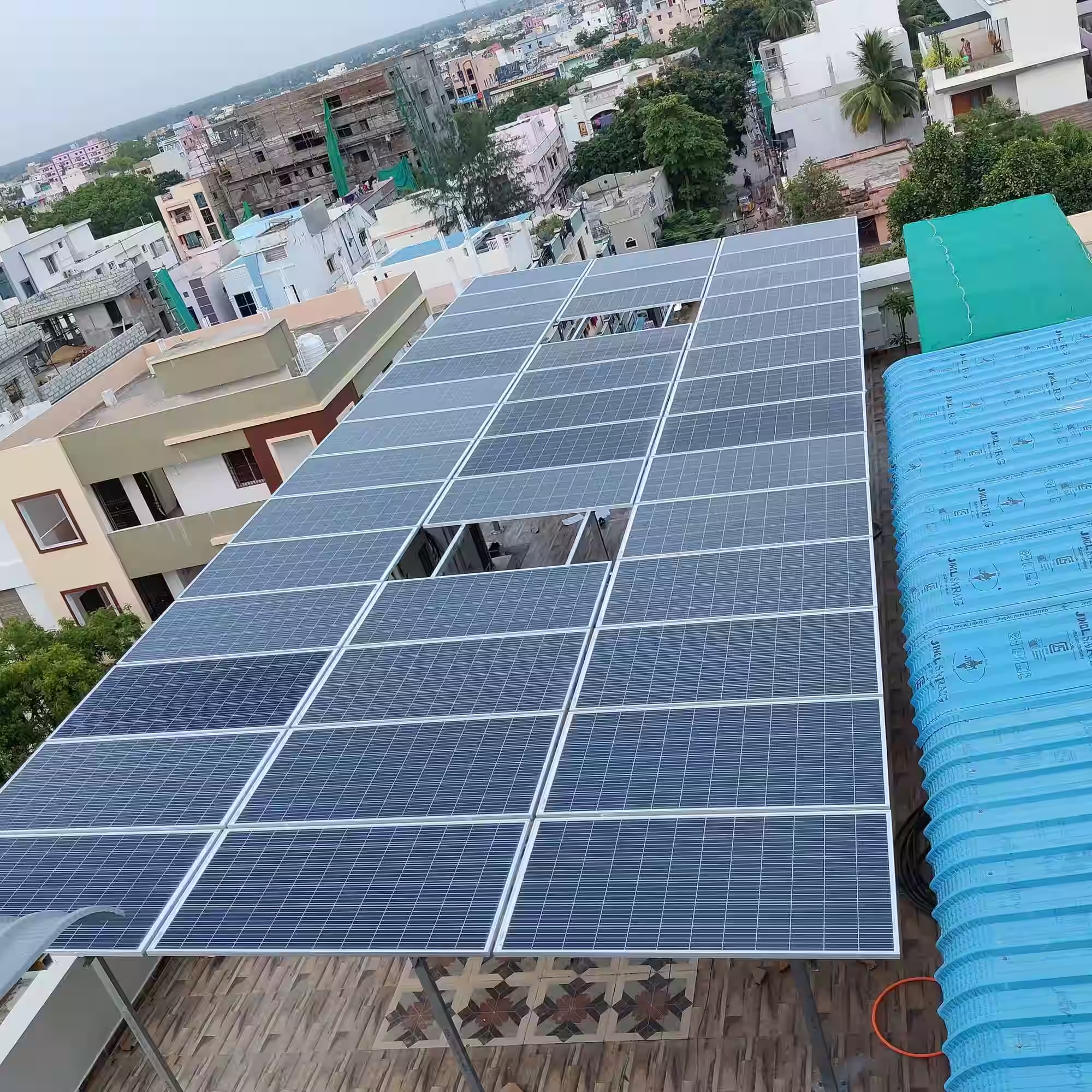
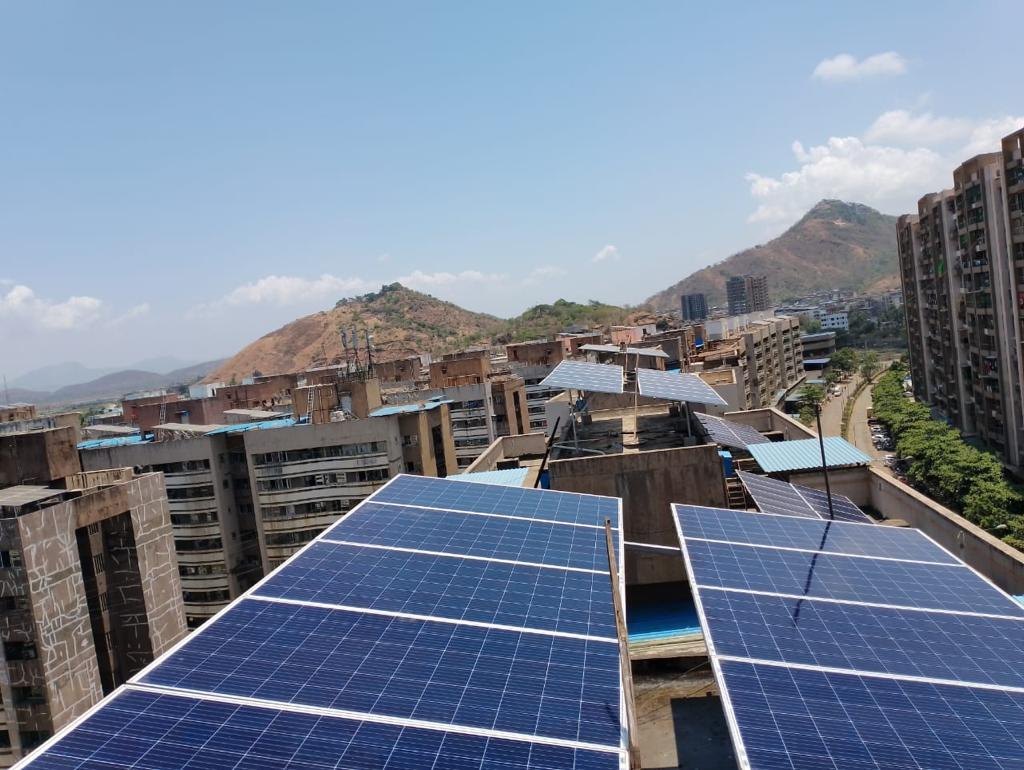
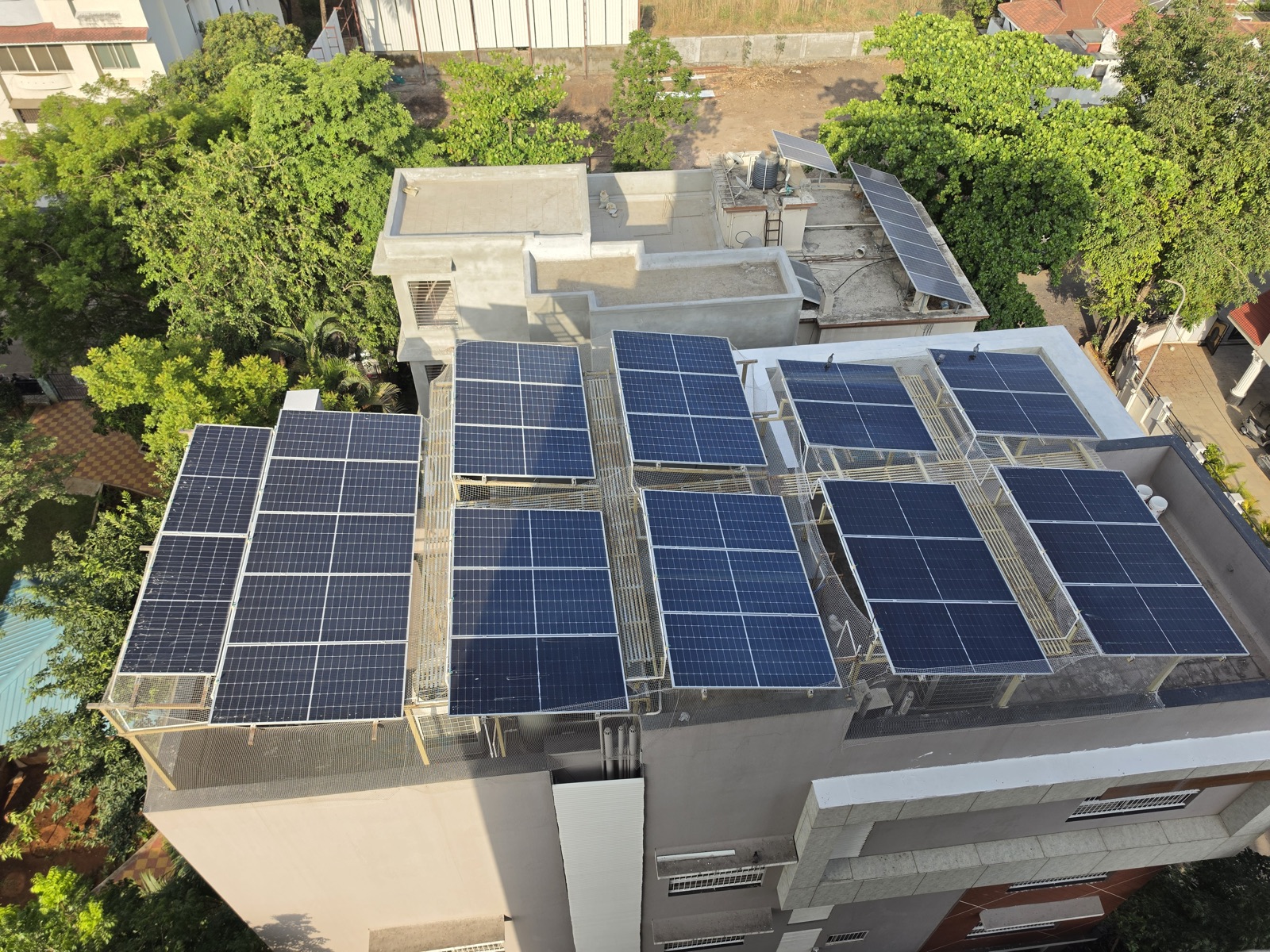
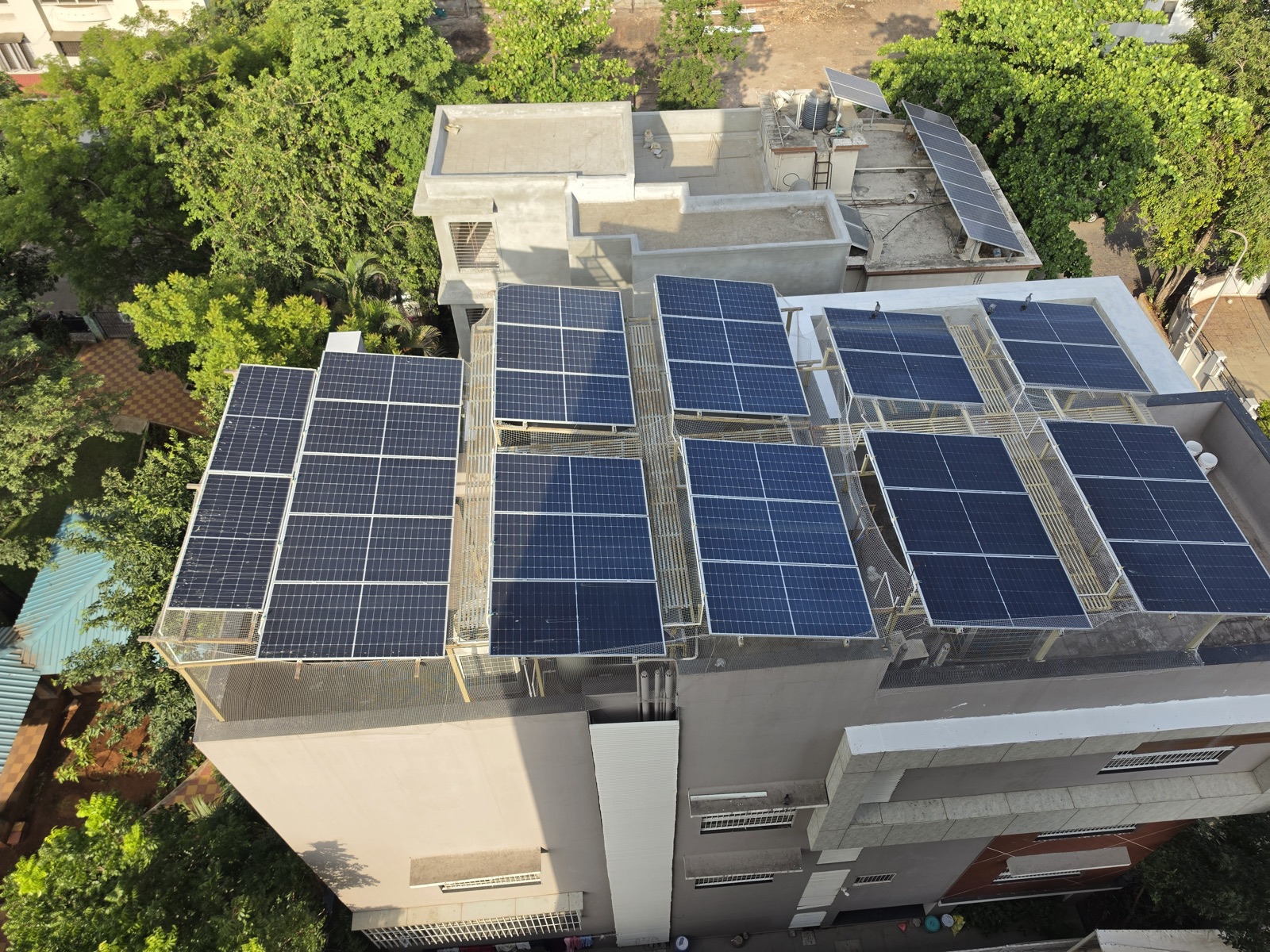
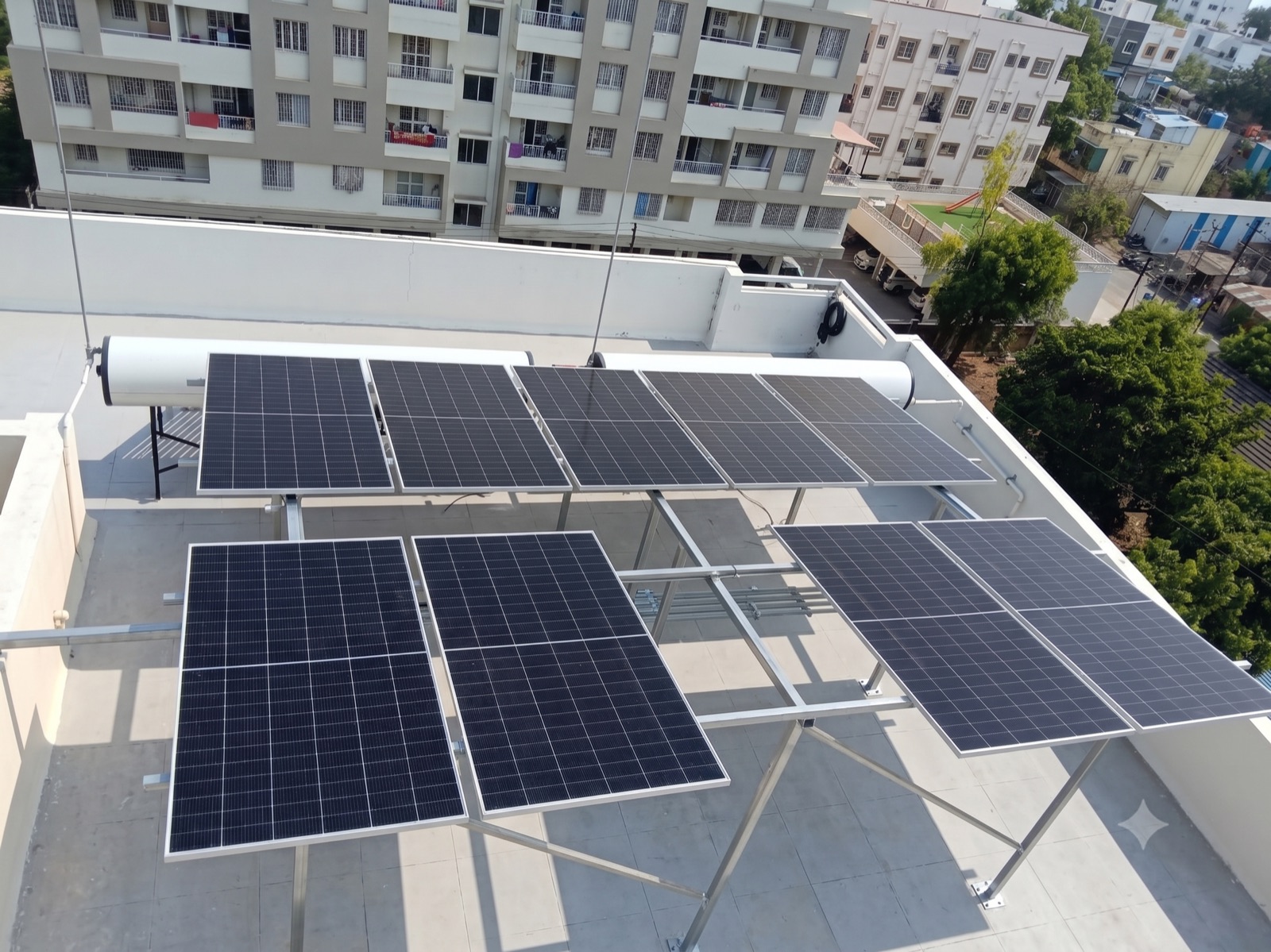
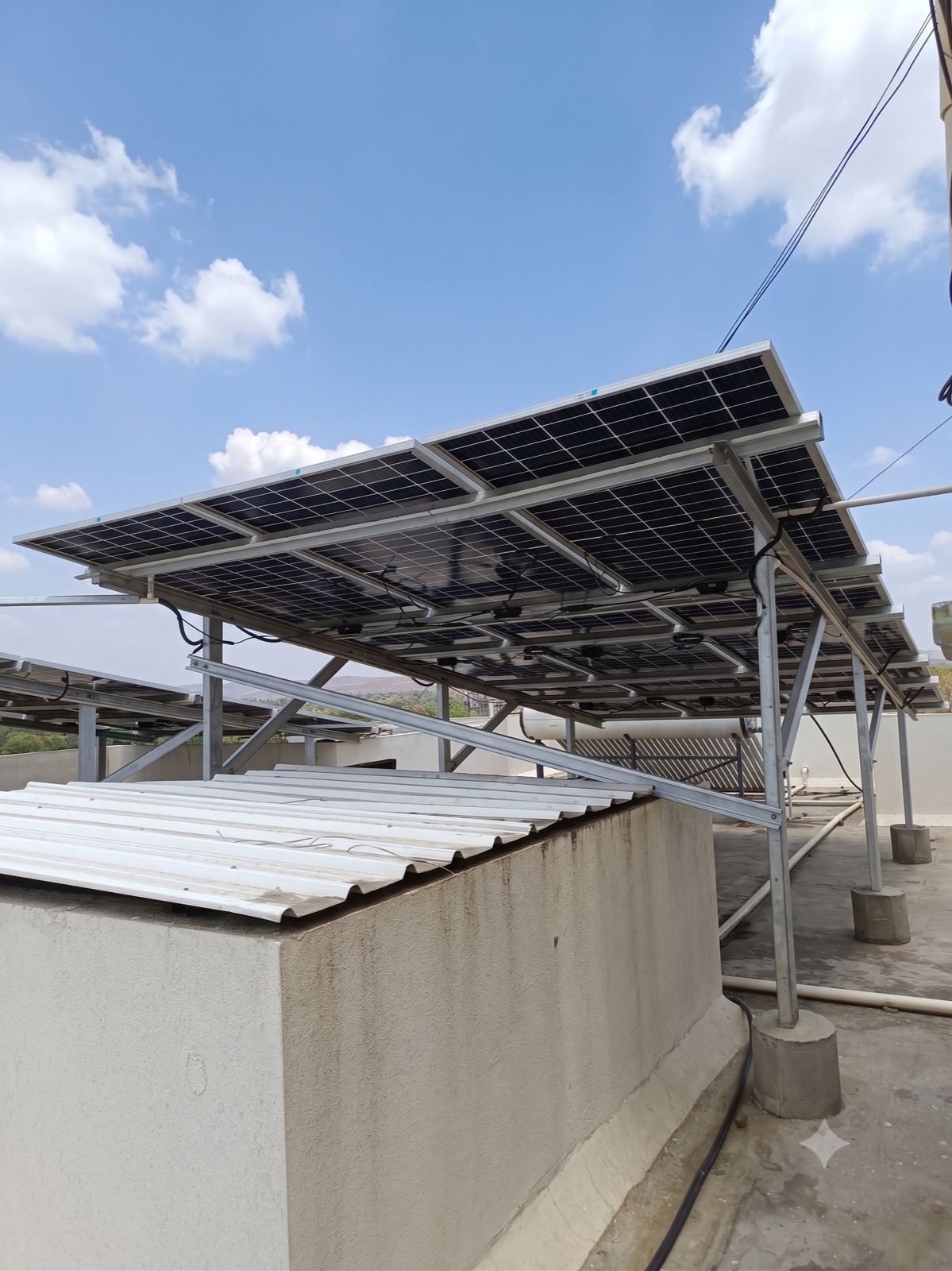
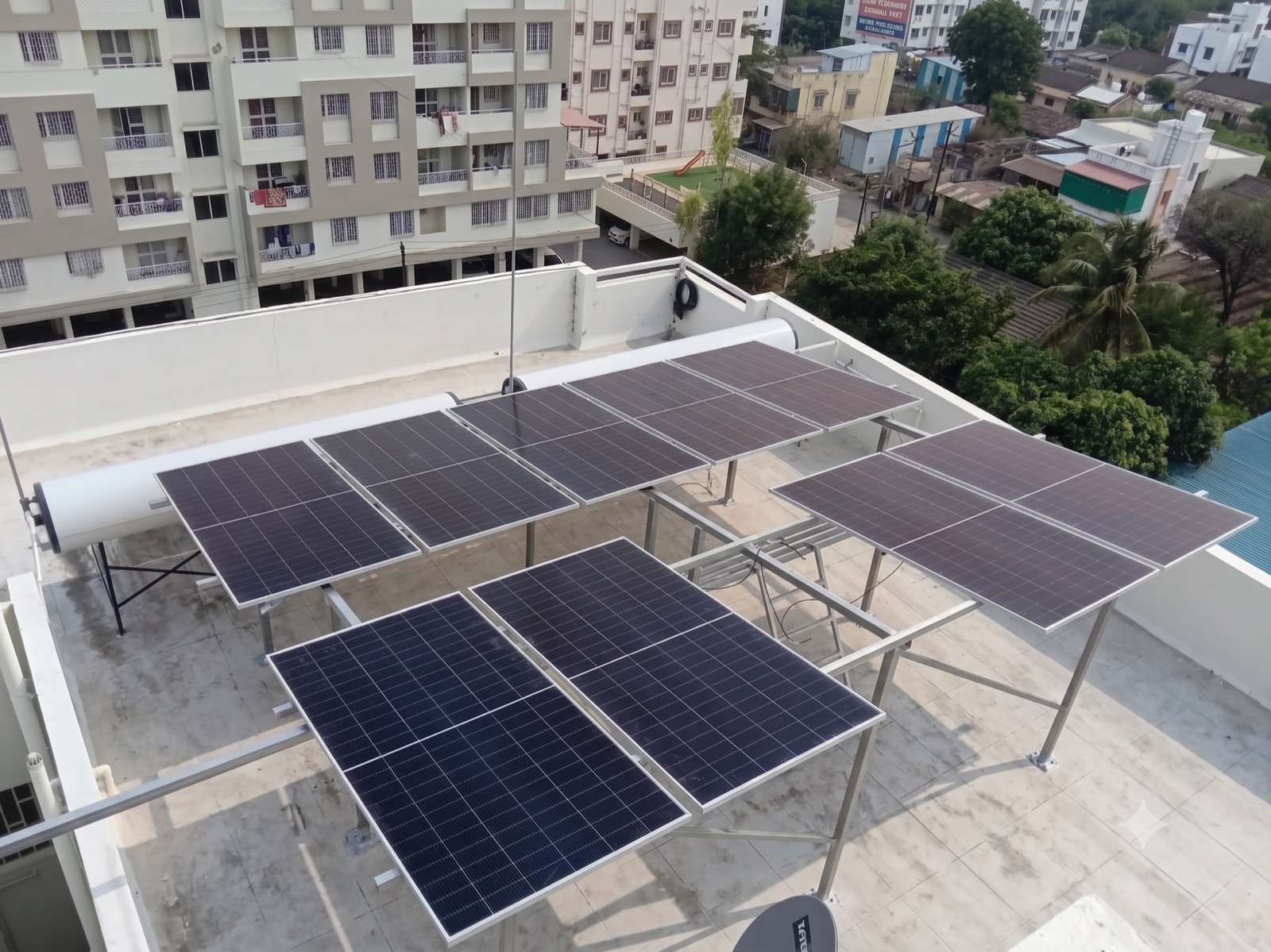
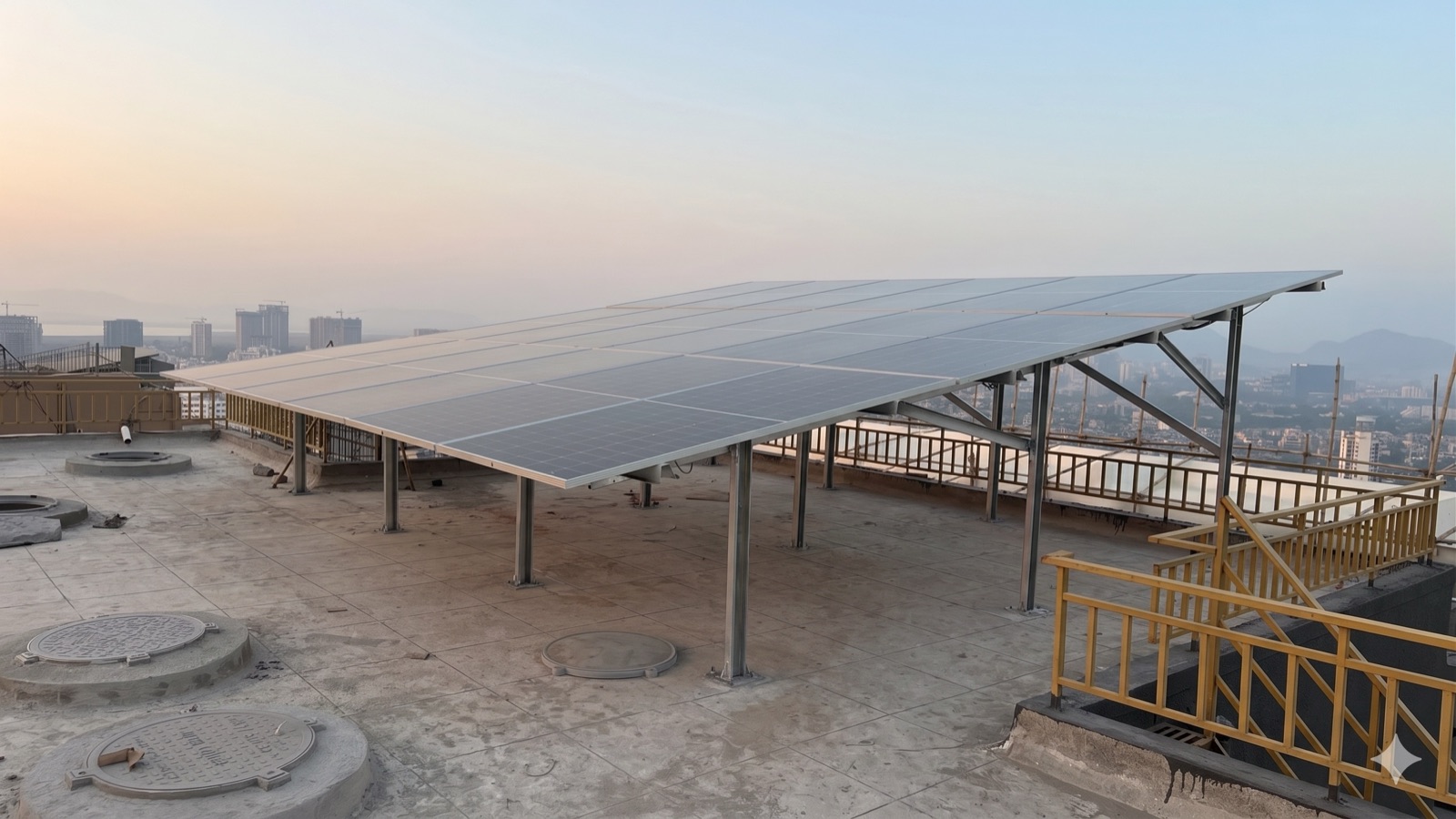
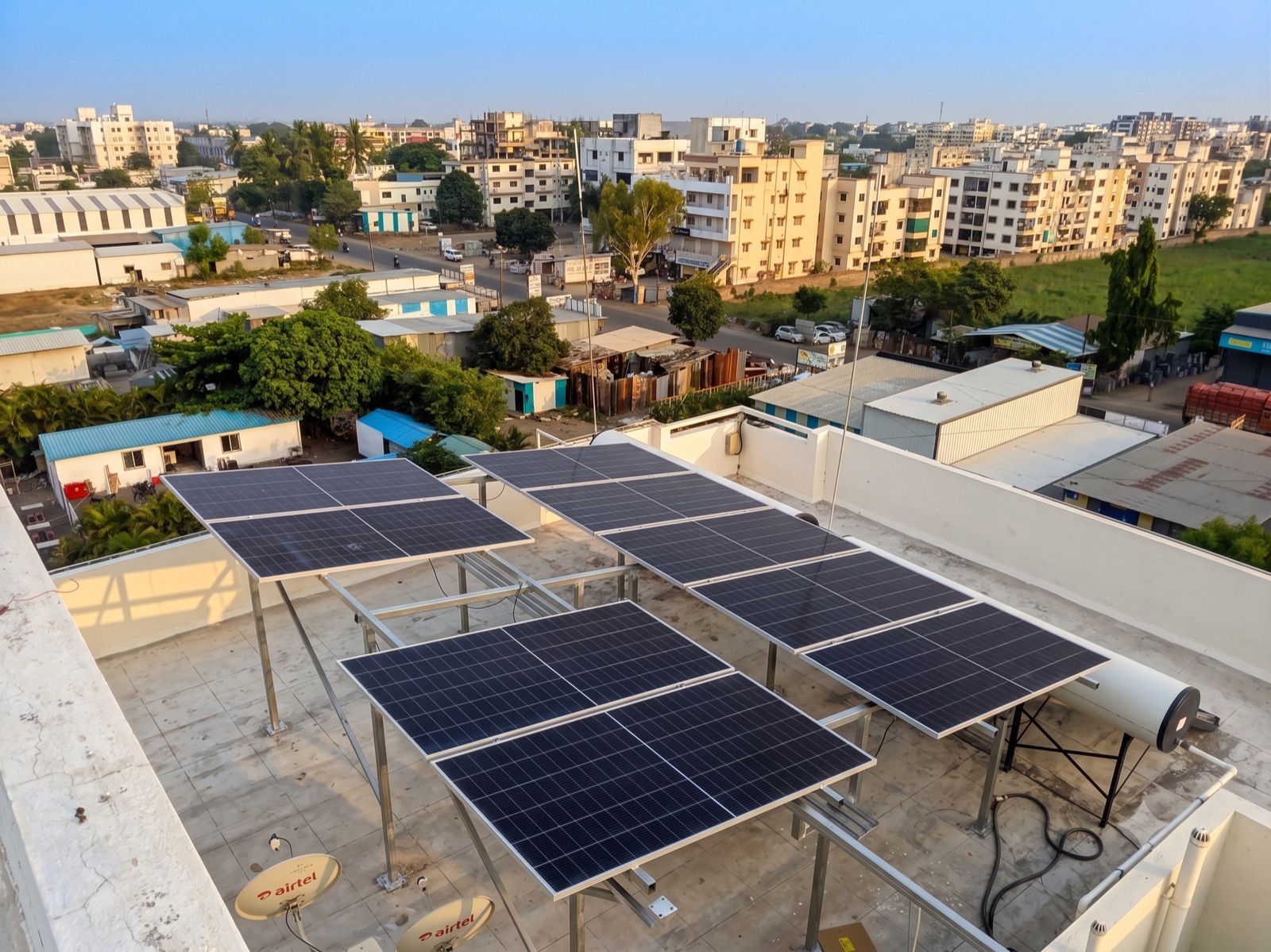
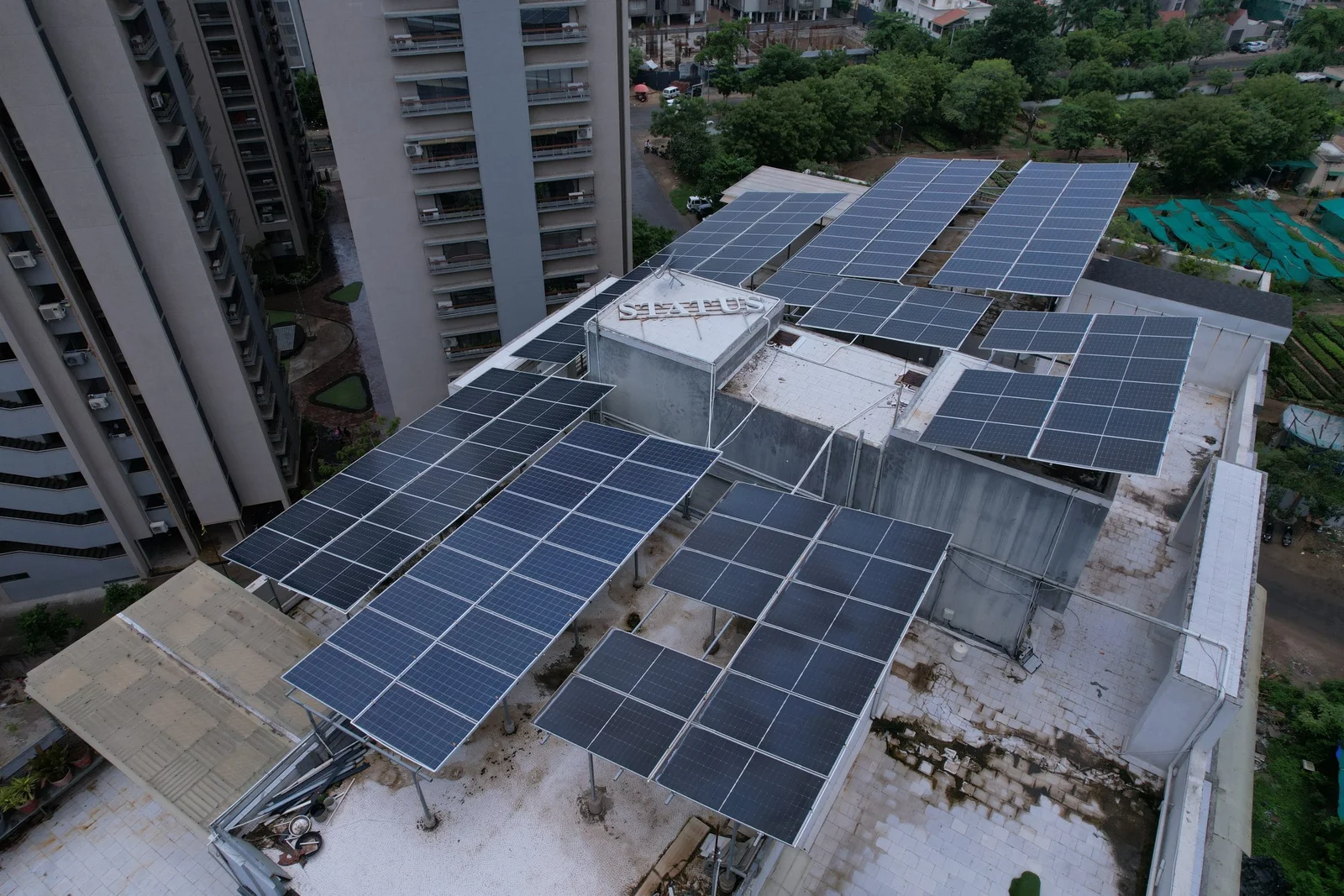
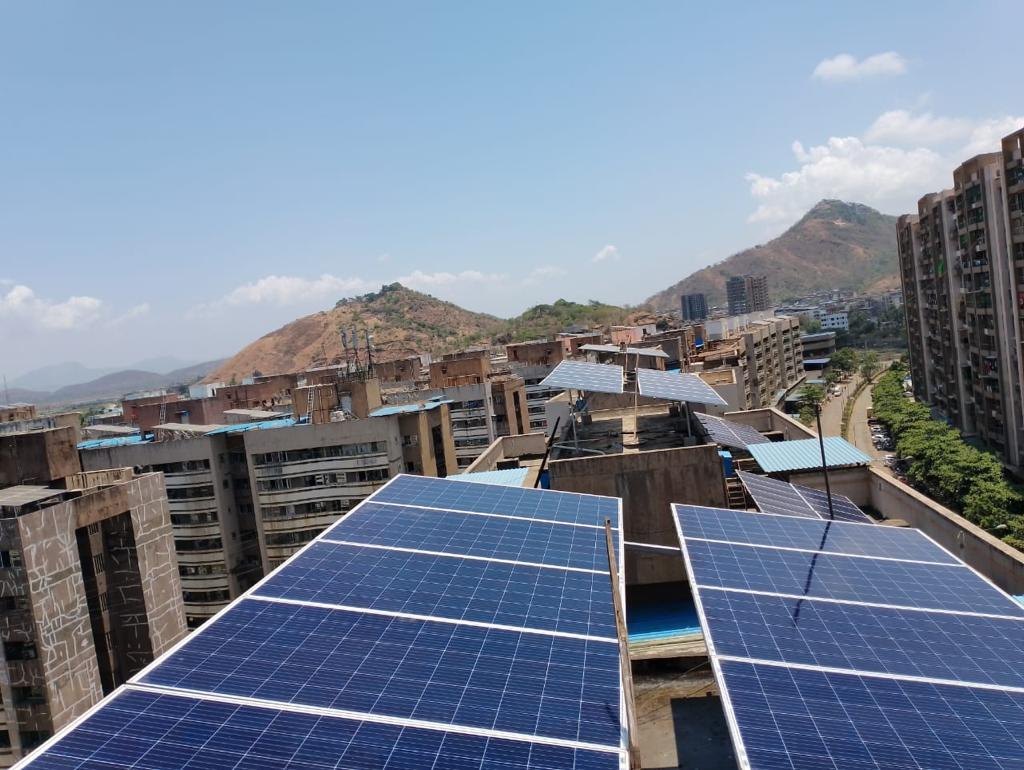
Prompt has installed group net metering solar systems across cooperative housing societies, apartment complexes, and gated communities in Pune, Nashik, and across Maharashtra. A society with 20–50 flats can cut its common-area electricity bill by 70–90% and recover installation costs within 4–6 years.
What Is Group Net Metering for Housing Societies?
Group net metering lets a housing society install one rooftop solar system to power all common areas — lifts, pumps, lighting, and security. Surplus units go back to the grid and are credited to the society's electricity account. MSEDCL installs a shared two-way meter at the building's main connection point. Savings are automatically reflected in the monthly common-area electricity bill. No individual flat-level wiring is required for common-area solar.
How Much Solar Does a Housing Society Need?
| Society Size | Common Load (kW) | Recommended System | Est. Monthly Generation | Monthly Bill Saving |
|---|
| 10–20 Flats | 5–10 kW | 10 kW | 1,100–1,200 units | ₹8,000–₹10,000 |
| 20–50 Flats | 10–25 kW | 25 kW | 2,750–3,000 units | ₹18,000–₹24,000 |
| 50–100 Flats | 25–50 kW | 50 kW | 5,500–6,000 units | ₹40,000–₹50,000 |
| 100+ Flats | 50–100 kW | 100 kW | 11,000–12,000 units | ₹80,000–₹1,00,000 |
PM Surya Ghar Subsidy for Housing Societies
Under the PM Surya Ghar Muft Bijli Yojana, cooperative housing societies qualify for subsidy when each residential unit is registered individually on the national portal. Each flat can claim up to ₹78,000 central subsidy on their share of the shared solar system. A 25-flat society installing a 50 kW system can collectively receive ₹19.5 lakh in central subsidy before any state-level incentives. Prompt handles all portal registration, DISCOM coordination, and subsidy documentation at no additional charge.
Step-by-Step Process: AGM to Solar Activation
- Society AGM resolution: Pass a formal resolution authorizing solar installation and appointing a representative. This is required by MSEDCL for group net metering applications.
- Free site survey: Prompt's engineers assess roof area, structural load capacity, shadow analysis, and existing electrical load to size the system accurately.
- Quotation and agreement: Detailed proposal with system size, cost, subsidy estimate, payback period, and 25-year generation projection.
- MSEDCL net metering application: We submit the complete application including society registration documents, load sanction letter, and technical drawings.
- Installation: Typically 5–10 working days for systems up to 100 kW. Zero disruption to residents during installation.
- PM Surya Ghar portal registration: Each flat owner registers on the national portal using their individual electricity consumer number.
- Inspection and activation: MSEDCL inspects and activates the two-way meter. System goes live and billing adjustment begins immediately.
- Subsidy credit: Central subsidy is credited to each registered flat owner's bank account within 15–20 days of net metering installation, based on our experience across Maharashtra projects.
Common Reasons MSEDCL Rejects Housing Society Applications
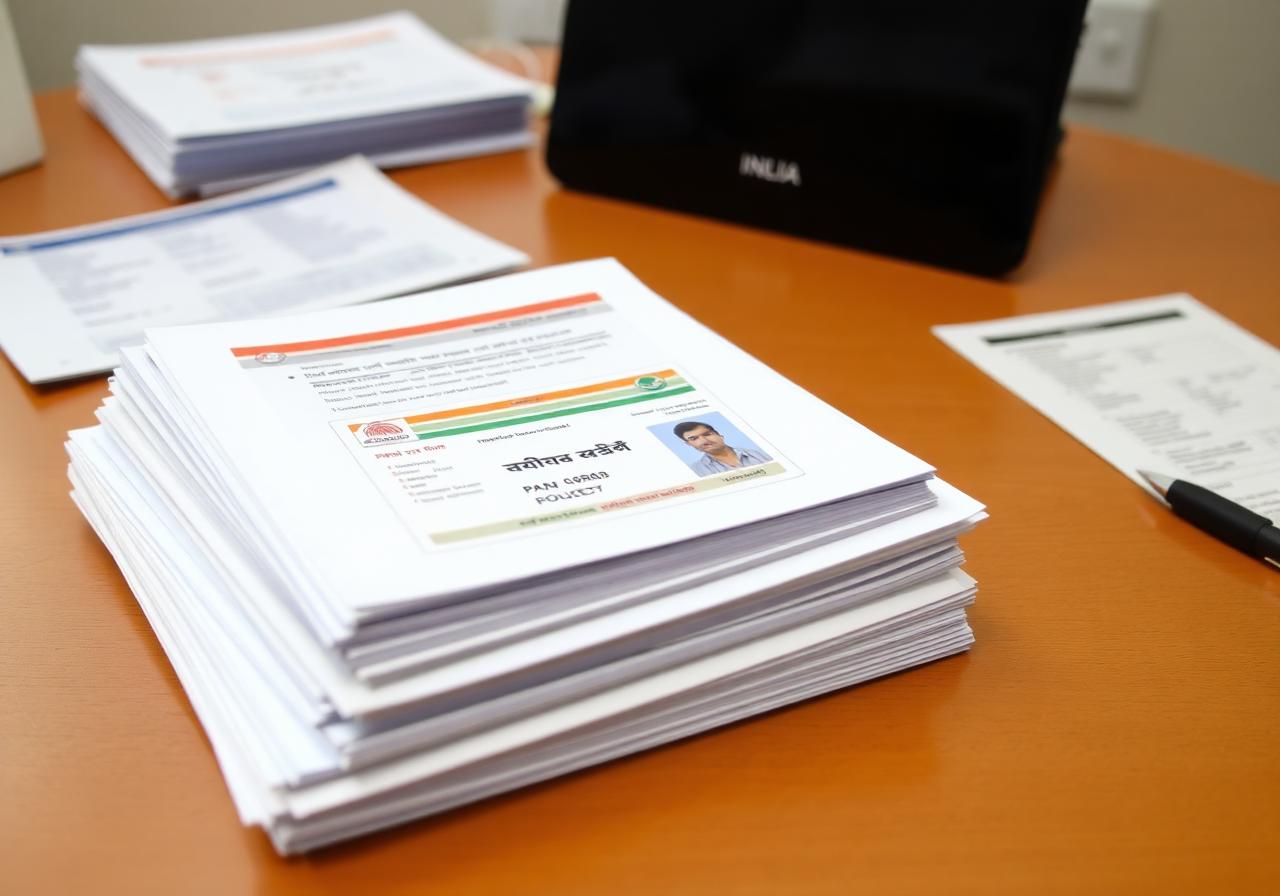
Based on Prompt's field experience, MSEDCL and the PM Surya Ghar portal reject housing society applications for three main reasons. First, name mismatches between Aadhaar, electricity bills, and society registration documents. Second, panels or inverters not on MNRE's approved list. Third, earthing or structural issues raised during MSEDCL's site inspection. Prompt uses only MNRE-empanelled equipment and checks all documents before submission. This removes the most common rejection risks.
Rooftop Space Requirements
A 1 kW solar system requires approximately 80–100 sq ft of shadow-free roof area. A 50 kW system needs 4,000–5,000 sq ft. Most housing societies with a podium roof, terrace, or overhead water tank structure have sufficient space for a 25–100 kW system. Prompt's survey includes a detailed shade analysis using drone imagery to confirm usable area before any commitment.
What Prompt Handles on Behalf of the Society
- Society AGM documentation and MSEDCL application submission
- MNRE-approved panels and inverters with ISO-certified installation
- PM Surya Ghar portal registration for all individual flat owners
- MSEDCL inspection coordination and commissioning
- 25-year AMC with panel cleaning, inverter health checks, and performance monitoring
- Real-time generation dashboard accessible by the society committee
Is Solar Worth It for Housing Societies in Pune?
Yes — housing society solar in Pune is one of the most financially sound decisions a society committee can make. MSEDCL commercial tariffs for housing societies (billed under LT-II) currently run ₹8–₹10 per unit for lifts, pumps, and common lighting. A 50 kW solar system generates approximately 5,500 units per month, replacing ₹44,000–₹55,000 worth of grid electricity. At current tariffs, most society solar systems pay back in 4–6 years — and then save ₹5–₹7 lakh per year in maintenance levy reductions for the next 20 years.
| Society Size | System Size | Approx. Cost | Monthly Saving | Payback Period | 25-Year Net Saving |
|---|
| 10–20 flats | 10 kW | ₹5–₹6.5 lakh | ₹8,000–₹10,000 | 5–6 years | ₹18–₹24 lakh |
| 20–50 flats | 25 kW | ₹12–₹15 lakh | ₹18,000–₹24,000 | 4–6 years | ₹40–₹55 lakh |
| 50–100 flats | 50 kW | ₹22–₹28 lakh | ₹40,000–₹50,000 | 4–5 years | ₹90 lakh–₹1.1 cr |
| 100+ flats | 100 kW | ₹40–₹52 lakh | ₹80,000–₹1,00,000 | 4–5 years | ₹1.8–₹2.2 cr |
Costs and savings are indicative as of 2026 at current MSEDCL LT-II tariffs with 3% annual escalation. Prompt provides a detailed written savings projection during the free society survey.
PM Surya Ghar Subsidy: Individual Flats vs Common Area — What's the Difference?
The PM Surya Ghar Muft Bijli Yojana has two distinct application tracks for housing societies, and many societies miss out on one or both because they don't know this distinction.
Track 1 — Common area solar (society level): The housing society installs a shared solar system for lifts, pumps, and common lighting under group net metering. The society's common electricity bill drops to near zero. The subsidy here is ₹18,000 per kW (up to 500 kW, capped at 3 kW per registered flat) deposited to the society's bank account.
Track 2 — Individual flat solar (per owner): Each flat owner independently installs a rooftop solar system on their allocated portion of the terrace (in independent bungalow-style societies) or on a shared terrace with proportional allocation. Each registered flat owner receives the full ₹78,000 PM Surya Ghar subsidy directly into their personal bank account. This is separate from and additional to the common-area track.
A 25-flat society can therefore receive: ₹19.5 lakh (Track 2 — 25 × ₹78,000 individual subsidy) plus the Track 1 common-area subsidy on the shared system. Prompt handles both tracks in parallel so societies don't miss either source of government funding.
Common Questions About Housing Society Solar in Pune
How much does housing society solar cost in Pune?
A 25 kW system for a 20–50 flat society costs approximately ₹12–₹15 lakh before subsidy. After PM Surya Ghar central subsidy (each registered flat owner claims their share), the net cost can come down significantly. Most 25 kW society systems pay back in 4–6 years and save ₹18,000–₹24,000 per month on common-area electricity bills.
Can a rented apartment flat in a Pune housing society claim PM Surya Ghar subsidy?
No. The PM Surya Ghar subsidy is only available to the electricity consumer whose name appears on the MSEDCL bill — which for common areas is the housing society itself. Individual flat owners in owner-occupied units can register and claim subsidy on their proportional share. Tenants cannot claim.
Does housing society solar cover individual flat electricity too?
Standard group net metering covers only the society's common-area electricity account — lifts, pumps, lobby lights, security systems. Individual flat electricity continues on separate MSEDCL meters. If individual flats want solar, each flat needs its own rooftop solar system with a separate net meter. Prompt can design both common-area and individual flat systems for the same society.
What is the PM Surya Ghar subsidy for a 100-flat housing society in Pune?
A 100-flat housing society in Pune can receive up to ₹78 lakh in PM Surya Ghar central subsidy — ₹78,000 for each of the 100 individually registered flat owners claiming their proportional share of the rooftop solar system. On a typical 100 kW shared system, the society also receives a separate common-area subsidy of ₹18,000 per kW (₹18 lakh on 100 kW). Combined, a 100-flat society can access over ₹90 lakh in central government subsidy. Prompt handles all portal registrations and MSEDCL coordination to ensure the full subsidy reaches residents' accounts.
Which housing societies in Pune have installed solar with Prompt?
Prompt Solar has completed group net metering solar installations for housing societies across Pune — in Aundh, Baner, Hadapsar, Wagholi, Chikhali, Moshi, PCMC, Kothrud, Bavdhan, Kondhwa, and Undri within PMC and PCMC limits. In the rural belt, completed projects include societies in Manchar, Narayangaon, Rajgurunagar, and Pargaon. We are MNRE-empanelled, rated 4.9 stars on Google from 158+ verified reviews, and have managed PM Surya Ghar portal registrations for 500+ installations across Maharashtra. Call 98903-98962 for a free society roof survey.
Housing Societies We Serve in Pune
Prompt Solar has installed group net metering solar systems for housing societies across Pune. Our completed society projects span Aundh, Hadapsar, Wagholi, Chikhali, Moshi, PCMC, Pimpri-Chinchwad, Baner, Kothrud, Bavdhan, Kondhwa, and Undri. In the Ambegaon–Junnar belt, we have completed housing society projects in Manchar, Narayangaon, and Pargaon. Contact us for a free roof survey and savings estimate for your society.
Individual flat owners who want their own rooftop system can read our residential solar guide. For factories, offices, and businesses in Pune, see our commercial solar installation page.